Rated Excellent on Trustpilot for our Customer Service
Delivering Property Repair Treatments across Scotland for over 25 years
How to Treat Woodworm
Woodworm is a common problem in properties across Scotland, this is because timber is a common construction material, especially in lofts and sub floor voids, areas where woodworm infestations can thrive.
If you are facing a woodworm problem you can either attempt to solve the problem yourself, or turn to professional help. This will depend on various factors, including the extent of the problem, and potential damage to structural timbers.
We have put together a guide on how to get rid of a woodworm problem in your property, and the factors that should be taken into consideration. Based on this you can decide whether to attempt DIY treatment, or go with professional assistance.
If you do require professional woodworm treatments, Wise Property Care are here to help. We have been helping homeowners and commercial clients deal with woodworm infestations for decades, with a number of CSRT and CSTDB qualified surveyors operating across Scotland. We can provide advice and long term solutions for woodworm, typically backed by our long term guarantees, giving you peace of mind you are protected long term.
Identifying a Woodworm Problem
The first step to getting rid of a woodworm problem is to confirm it is caused by woodworm. Woodworm are the larvae of woodboring beetles that bore away inside timber until they emerge as an adult beetle. Sometimes pin holes or nail holes can be mistaken for woodworm damage.
There are many signs of woodworm, with the most obvious being small emergence holes created by the adult beetle in the surface of the wood at the end of their lifecycle. These holes however do not always indicate the problem is still active, as the woodworm infestation could be historic and has already died out. Recent emergence holes should look fresh and clean, whereas old emergence holes will look dark and dusty.
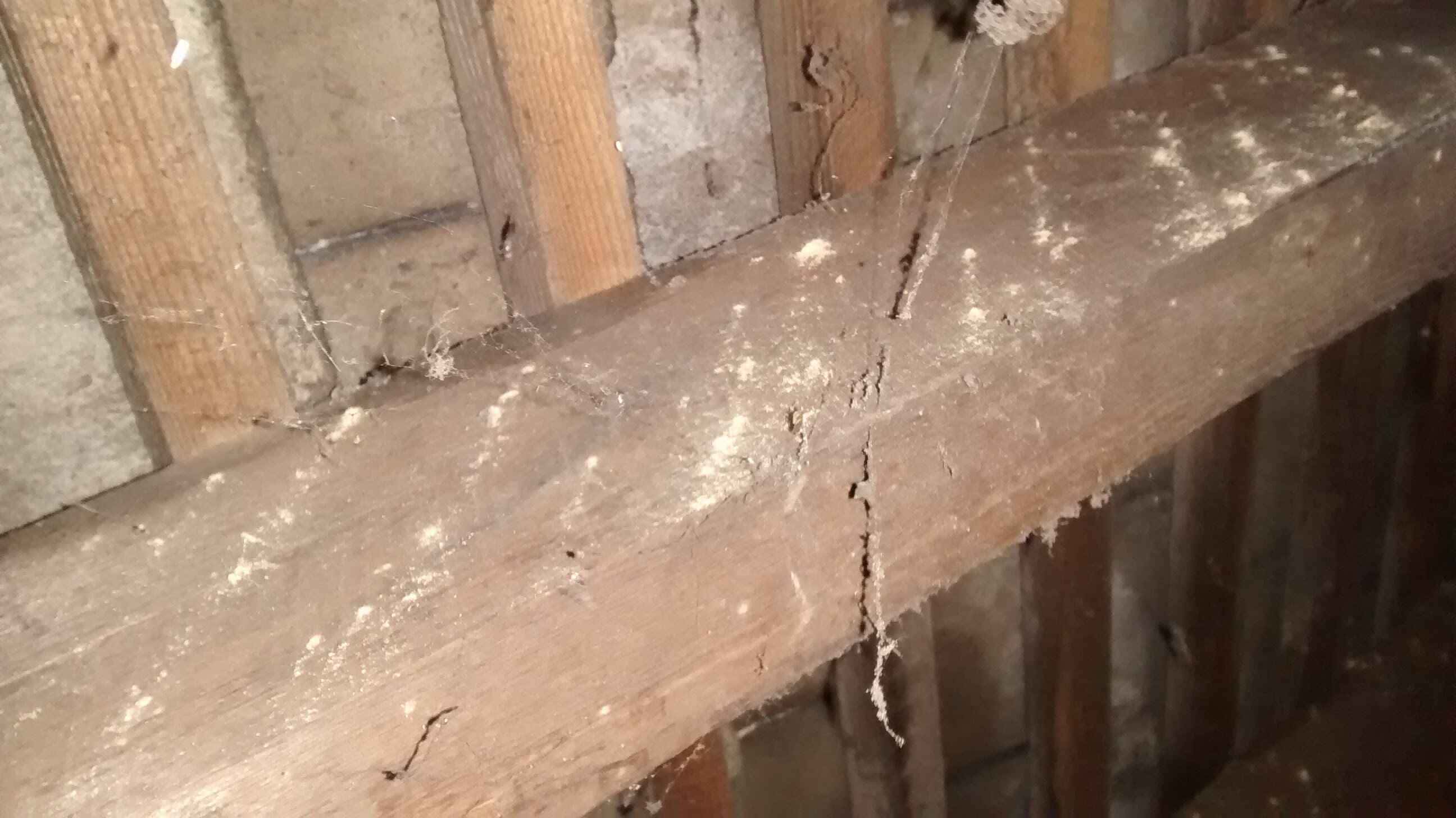
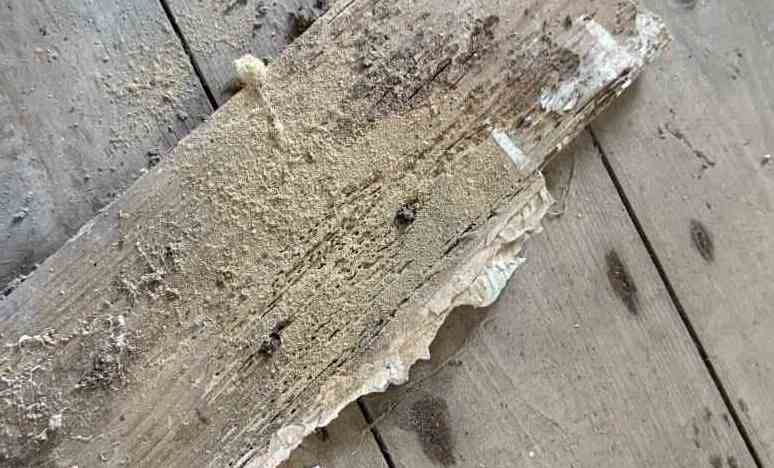
Small emergence holes with frass nearby can indicate an active woodworm infestation.
The surveyor will then confirm if the woodworm problem is still active, and this can be done by spotting fresh exit holes in timber, which is often accompanied by a fine powdery dust known as frass. You may notice timber has crumbling edges or the appearance of tunnelling, while in severe cases floorboards may appear bouncy. Dead beetles on surfaces near windows are also a sure sign of a woodworm infestation.
There are various types of woodworm that attack timber in properties across Scotland, with each species causing various levels of damage. Sometimes a woodworm problem can be solved by removing a damp source, with specialist treatments not being required. Because of this it is important to correctly identify whether or not the problem is woodworm, and if so, which species is causing the issue. This will give you an understanding of your next steps.
If you are unsure, or would like professional advice, a professional surveyor can provide a damp and timber survey, with their findings detailed in a survey report. This will also contain information regarding timber repairs, if required.
Can I Treat a Woodworm Problem Myself? Factors to Consider
While it may be possible to treat relatively small woodworm infestations yourself, especially in furniture or isolated areas, if structural timbers are affected, you may require professional help. A thorough inspection taking into account the below factors will give an indication of your next steps.
Is there a Damp Problem?
Damp problems can be caused by numerous factors like leaking pipes and building defects causing moisture penetration or rising damp. This can increase the moisture content of timber, and provide ideal conditions for some woodworm species.
If you notice a damp problem near to where you have identified signs of woodworm activity, this could be increasing the problem and could lead to further issues in the future.
Sometimes damp proofing may be required to prevent the problem, while other issues such as wet rot or dry rot can occur. Certain types of woodworm infestations will die out without a source of moisture, while others may still require specialist treatments.
Woodboring Weevil will consume timber affected by damp and fungal decay. It will die out once the timber dries, meaning it does not require insecticidal treatments like other types of woodboring beetles.
Isolated Woodworm Damage or Widespread?
If the problem is isolated to certain areas of the property you may be able to carry out woodworm treatments yourself. If the problem is prevalent, or hidden in hard to reach areas like sub floor voids or behind panelling, you may have a much larger problem that needs to be thoroughly investigated and addressed by a professional.
Are Structural Timbers Affected?
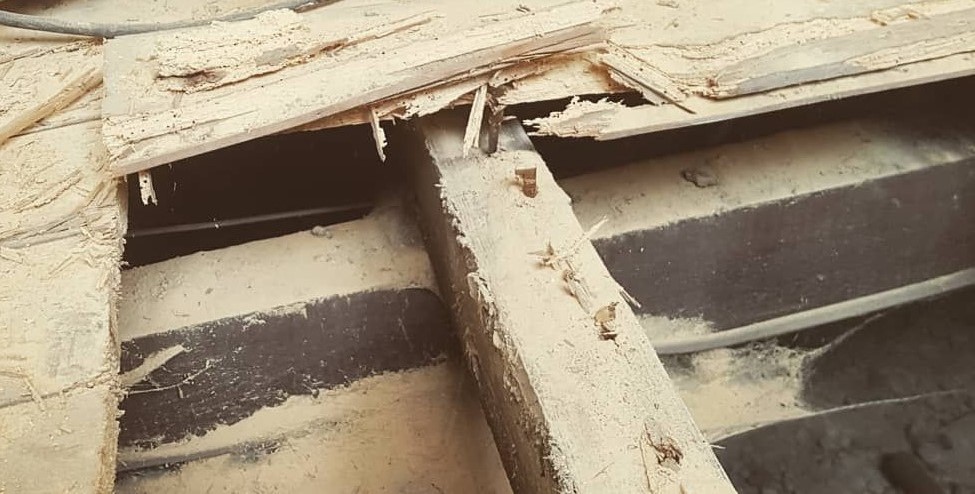
DIY treatments are useful in preventing woodworm infestations in second hand furniture or cosmetic timber, but if they are affecting structural timber such as floorboards, joists or beams you may require professional assistance. If the DIY treatment fails and damage becomes severe enough, these timbers could lose their structural integrity and require replacement. Tunnelling by woodworm larvae causes the majority of damage, which can remain unseen inside the timber. This is why it's so important to understand the extent of the damage.
Woodworm can cause severe damage in hard to access areas, like the underside of floorboards in the sub floor void.
When to Choose Professional Help?
If you have noticed signs of woodworm and are worried about your next steps, a professional survey can provide answers on the species involved, whether or not the problem is still active, and any treatments required. This is done through a damp and timber survey carried out by a qualified surveyor trained to assess timbers in properties.
Wise Property Care have a number of Property Care Association (PCA) qualified surveyors who can help provide you with answers and long term solutions no matter where you are located in Scotland.
Can I Carry out Woodworm Treatments Myself?
It is possible to treat woodworm with DIY solutions, once you have correctly identified the type of woodworm species causing the problem, and if the infestation is still active. This is because the treatment process may vary depending on the type of species, as the problem may require damp proofing and improvements to ventilation, rather than insecticidal treatments.
Often second hand furniture or wooden items brought into the home can bring in a woodworm infestation, hidden for years in attics or garages where the items were previously stored.
For a large woodworm infestation or if structural timbers are affected, you may require professional help, unless you have experience in joinery. DIY treatments cannot guarantee complete removal of a woodworm infestation and it could lead to further damage in the future, which could end up being more costly in the long run.
Professional treatments will start with a thorough inspection in order to identify any damage to timber, even in hard to reach areas. Professional treatments are also typically backed by a long term guarantee, giving you peace of mind your property is protected long term.
Woodworm in Furniture
To prevent woodworm in furniture you need to find out if the infestation is active, before purchasing insecticide from a reputable hardware store. Do not use products such as bleach or other remedies like WD40 as these do not penetrate into the timber and may cause damage.
Always use an insecticide to coat the affected area to manufacturers instructions and be aware that most products are water based so may not penetrate varnish/polish. If they do, the water vapour can also get trapped below the surface finish and darken the wood. Once applied make sure to regularly check the item to ensure no new emergence holes have appeared.
Until you are sure the infestation is dead, you should move the item of furniture away from other wooden items or timber in the home to prevent the infestation from spreading.
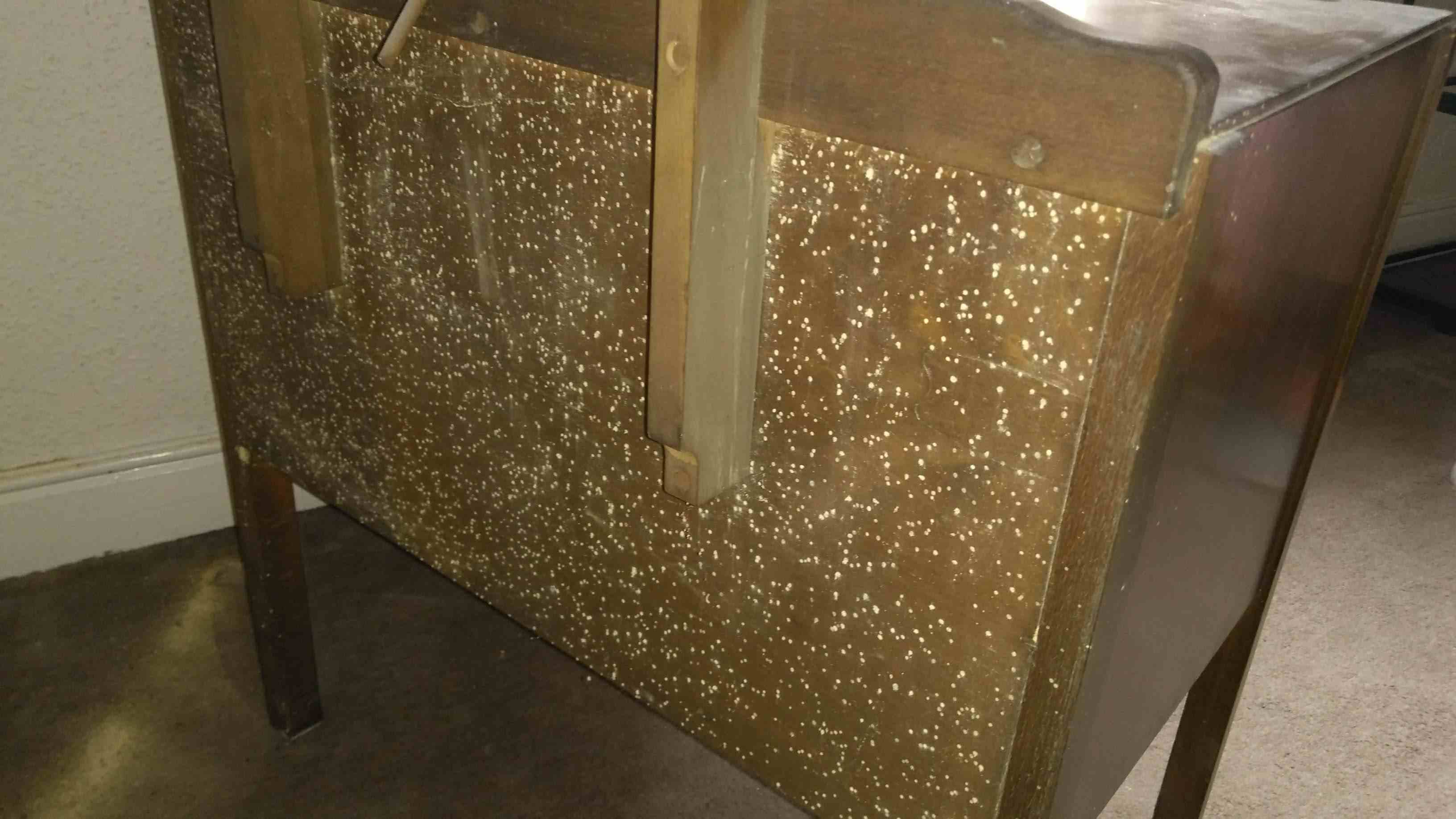
Common Furniture beetles will often be found on the old plywood back and bases to drawers of furniture. This is because the plywood often gets damp from being close to cold outside walls and is high in nutritious sapwood.
Professional Woodworm Treatments
Professional woodworm treatments are advisable when a property has an active woodworm infestation affecting structural timber. A professional woodworm treatment will stop the woodworm infestation over a life cycle, and prevent further damage in the future. They are often backed by guarantees in order to provide the owner of the property with a long term solution.
The first step is for a qualified professional to inspect the condition of timber across the property, in order to understand the extent of the woodworm problem and the species involved.
Woodworm Surveys Scotland
A woodworm survey, sometimes referred to as a damp and timber survey, is carried out by a CSRT or CSTDB qualified surveyor. They will inspect the condition of timber to understand the extent of the woodworm issue, and will confirm whether or not insecticidal treatments and timber repairs are required
Woodworm infestations can often be hidden from sight, so they will check hard to reach areas like behind panelling, under floorboards and in the loft space. They will also check for any source of damp that can cause damage to timber, plasterwork and structural issues.
Once a survey has been carried out, they will provide a survey report detailing the plan for treatments, but only if they have come across any issues. If there is no active woodworm infestation, there is no need for any remedial work.
If an active infestation is confirmed, and you choose to go ahead with treatments, Wise Property Care technicians will be on hand to carry out treatments and repairs. This will depend on the extent of damage to timber, and if it needs to be removed and replaced.
The technician will then apply specialist insecticidal products that will kill the woodworm on contact, or are ingested by the larvae. This breaks the life cycle and removes the infestation.
We have a number of local technicians across Scotland who are skilled in joinery and carrying out woodworm treatments to the highest industry standards.
When they arrive at your property they will take time to explain the process from start to finish, while minimising disruption for you. If required, our technicians are equipped with protective floor coverings, Hilti dust extraction units and vacuums in order to keep your property clean and tidy.
Typically professional woodworm treatments carried out by Wise Property Care are backed by 20 year guarantees, giving you long term peace of mind the problem is solved.
Can I just ignore woodworm?
No, it is a bad idea to ignore a woodworm problem as this could cause the infestation to continue growing and spreading throughout the property. The lifespan of an adult beetle is only a few weeks, but the larvae which are located inside the timber will tunnel and feed on it for years. It is the larvae that cause the most damage to timber, which if left can remove the structural integrity and even lead to the collapse of floorboards, beams or joists.
Woodworm infestations once they have taken hold will rarely go away on their own, especially if the conditions are right.
If you are concerned about a woodworm problem and would like assistance from a professional company, get in touch with Wise Property Care today. We have a number of branches across Scotland, and are here to help with any issues relating to damp and timber.
When you are concerned about woodworm or timber problems in your home or property, you want to use a company with experienced and specialist surveyors - with the right training and knowledge to reach the proper diagnosis.
Wise Property Care have both CSRT (Certificated Surveyor in Remedial Treatments) and CSTDB (Certificated Surveyor of Timber and Dampness in Buildings) qualified surveyors operating from a network of local branches - meaning no matter where you are in Scotland, we have a surveyor local to you.
Wise Property Care have been fixing timber problems and building value back into Scottish properties since 1996.
We have a proven track record working with homeowners, social housing and commercial clients across Scotland, delivering effective preservation solutions while ensuring full compliance with industry regulations and health and safety standards.
We are proud members of the Property Care Association (PCA), the trade association that governs our industry. This means you can trust you’re getting professional and honest advice, and treatments following the industry best practice.
Wise Property Care are endorsed by Which? Trusted Trader - meaning our customer service and workmanship has passed rigorous trading standards assessments.