
For your Local Experts call us on 0808 301 8231 or Contact Us
Penetrating Damp Specialists - Scotland
Wise Property Care have been building back value into properties across Scotland for decades, with expert advice and solutions for penetrating damp.
Our local surveyors will take time to investigate the damp problem affecting your property, and provide recommendations to stop the problem for good - this is done through a damp and timber survey.
Wise Property Care are registered members of the Property Care Association (PCA) and our surveyors hold industry recognised qualifications highlighting our expertise and professionalism.
What is Penetrating Damp?
Penetrating damp is moisture entering a property from outside, through the fabric of the building into the interior. This is often caused by external issues such as defective roof coverings, high ground levels, damaged rendering or blocked guttering. It is often more noticeable after periods of rainfall, and can lead to damaged plaster, mould growth and structural issues if left untreated. Unlike rising damp, it is noticeable at any level in a building, and can often be identified by investigating the adjacent area outside to where the internal damp problem is located.
How to Identify Penetrating Damp in Scotland
Scotland has a humid climate and high rainfall which means that penetrating damp problems are common across the country, especially in coastal areas affected by wind driven rain.
Because many properties are of solid wall construction, they are susceptible to penetrating damp as the moisture is not stopped by a cavity and can pass straight through to internal surfaces.
You may have a penetrating damp problem in your property if you notice any of the following signs:
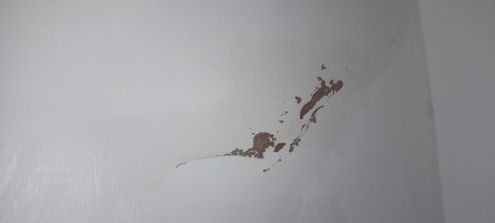
Damp Patches
Damp patches on walls or ceilings are an indication of a penetrating damp problem, especially if they are high up the wall. If you notice the damp patches get worse after a period of rainfall this could be because rainwater is penetrating through the fabric of the building, indicating a penetrating damp problem.
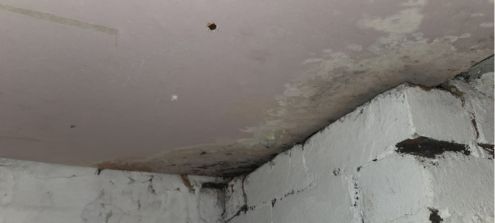
Mould growth and condensation forming
Condensation and mould can form on cold, damp walls, as warm, humid air condenses on the cold surface. This is a common problem when gutters become blocked, creating a damp patch that will seep through the masonry inside the property.
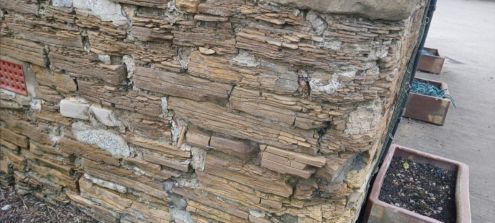
External Damage
You may spot missing mortar, cracks or spalled brickwork that have been caused by a penetrating damp problem. In winter the moisture will freeze in these defects, and as it expands it will ‘pop off’ the face of the bricks, and expand the cracks by what is called 'freeze thaw' action.
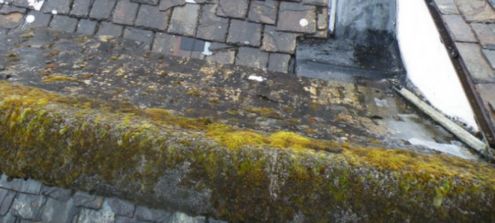
Vegetation, moss and algae growth
Signs of moss or algae growing above the damp proof course level of your property indicates a damp problem, and in severe cases you may even notice vegetation growing on masonry or in gutters or drains. If downpipe joints are leaking, it is not uncommon to get algae form on the damp patch as it runs down the wall.
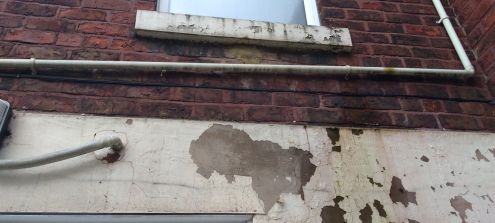
Visible leaks during periods of rainfall
You may notice water pooling in backed up gutters or around blocked drains. After a long period of rainfall you may notice a corresponding damp patch inside the property.
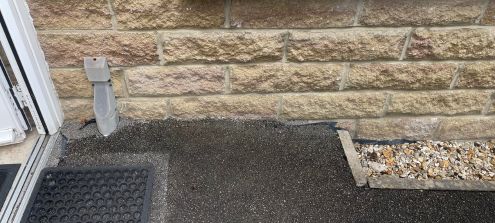
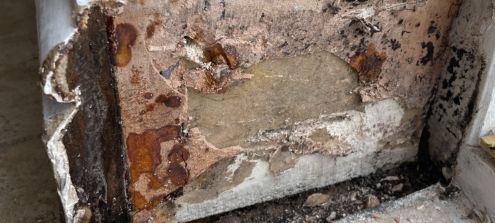
What Causes Penetrating Damp internally?
Penetrating damp is identifiable in Scottish properties through a number of ways. They may vary depending on the extent of the problem, and the location. Addressing these signs early can prevent more extensive and costly repairs, as penetrating damp problems can often be avoided by regular maintenance.
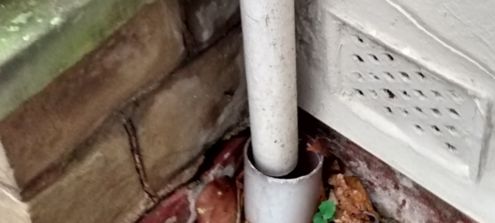
Building Defects
Building defects such as leaking gutters or blocked drains are often causes of a penetrating damp problem, and often require simple remedial repairs and regular ongoing maintenance to prevent the problem from returning.
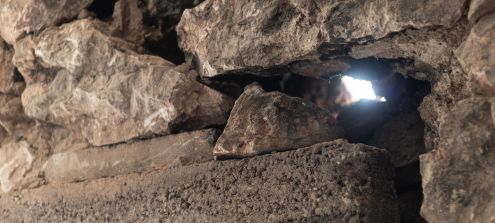
Damaged brickwork, stonework or mortar
If masonry is damaged or has poor pointing it can cause wind driven rain to penetrate into the building. Some types of masonry are more susceptible to penetrating damp because they are porous, and over time they will break down and deteriorate.
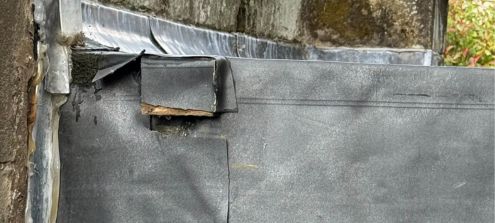
Faulty roofing or damaged chimneys
Defective flashing, roof coverings or damaged chimneys may allow moisture to penetrate into the roof space or into wall cavities. This can cause an internal damp problem over time.
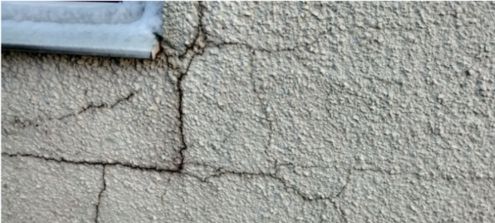
Damaged rendering
Many Scottish properties have external renders, which if damaged or deteriorated over time may allow moisture to soak in and penetrate into the fabric of the building. If you spot signs of this, your property’s render may need to be repaired.
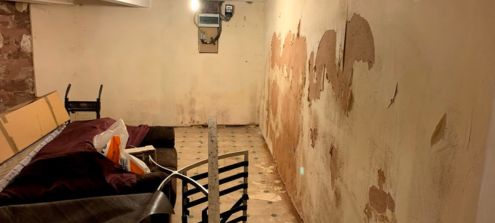
High ground levels
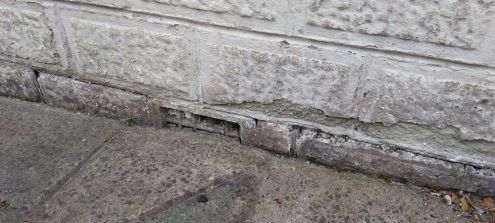
High ground levels bridging existing damp proof courses can cause lateral penetrating damp, while below ground spaces such as cellars and basements may also be affected by damp penetrating into the room. Basements can be converted into habitable spaces through specialist waterproofing techniques.
What is the difference between Penetrating Damp and Rising Damp?
Rising damp is caused by the upward movement of moisture through capillary action, so therefore is only ever observable just above ground level, typically up to a metre high. Penetrating damp can affect both walls and ceilings, and can be found anywhere throughout a building - usually caused by building defects or high ground levels allowing moisture to penetrate through the fabric of the building.
What is the difference between Penetrating Damp and Condensation?
Penetrating damp is moisture that has penetrated through the fabric of the building, either through building defects or high ground levels - either way the origin of moisture is from outside the property. Condensation is caused by the build up of excess moisture within a property, with this moisture condensing on colder surfaces, this is caused by moisture creation from within the property, usually from cooking, cleaning or washing up.
Penetrating Damp Treatments
In order to treat a penetrating damp problem, a qualified surveyor will first need to carry out an assessment of the property. They will examine both external elevations and internal wall surfaces to pinpoint entry points and severity of moisture ingress.
They will provide all their findings in a detailed survey report, which may include waterproof coatings to prevent penetrating damp, brick and mortar repairs, and improved drainage solutions. Our treatments align with British Standards and are designed to work long term.
The survey report will include recommendations for:
- Defective or missing mortar
- Porous or spalled brickwork or stonework
- Cracks or damage in external renders
- Defective rainwater goods such as gutters and drain pipes
- Visible damage to roof flashings, tiles or chimney breasts
Penetrating Damp Survey
If you are concerned about a penetrating damp issue affecting your property, Wise Property Care can provide a damp and timber survey to fully understand the problem, and provide you with expert advice.
We have a number of trained and qualified damp surveyors across Scotland.
Our local surveyor will use the damp and timber survey to identify any problems that could be causing a penetrating damp issue, both externally and internally. They will use a range of techniques, tools and equipment to aid in their diagnosis in order to understand the full extent of the problem.
Penetrating Damp Experts - Why Choose Us?
Wise Property Care have both CSRT (Certificated Surveyor in Remedial Treatments) and CSTDB (Certificated Surveyor of Timber and Dampness in Buildings) qualified surveyors operating from a network of local branches - meaning no matter where you are in Scotland, we have a surveyor local to you.
Wise Property Care have been fixing penetrating damp problems and building value in Scottish properties for over 20 years.
We are proud members of the Property Care Association (PCA), the trade association that governs our industry. This means you can trust you’re getting professional and honest advice, and treatments following the industry best practice.
Wise Property Care are endorsed by Which? Trusted Trader - meaning our customer service and workmanship has passed the rigorous trading standards assessments.
We are also members of Trustmark and are CHAS, Constructionline and Alcumus (SafeContractor) approved.
We are rated ‘Excellent’ on Trustpilot with over 550 independent customer reviews from across our branches in Scotland.


We cover the whole of Scotland from our network of local branches:
Penetrating Damp FAQs
-
Is penetrating damp expensive to fix?
Penetrating damp can often be prevented by regular maintenance of a property, and when necessary through minor repairs such as repairing damaged roof tiles or repointing missing mortar. The costs for specialist penetrating damp treatments such as masonry protection cream may vary depending on the area required.
-
What does penetrating damp smell like?
Over time you may notice a musty smell, similar to clothes being left too long without drying, indicating a damp problem in the area. This may get worse and require a thorough inspection to understand the source of the moisture causing the problem.
-
How long does penetrating damp take to dry out?
This will depend on the extent of the problem and severity of the water ingress, meaning anything from a few days to months. Solid walls will dry out at approximately 25mm (1 inch) a month, so a very thick wall may take a year or even longer.
-
What is Water Ingress?
Water ingress is a term used to describe water entering a property through the masonry or roof covering and may be due to a building defect such as a blocked gutter, leaky roof, wind-driven rain or deterioration of mortar within the brickwork joints. Water ingress can also be caused by faulty plumbing.
-
How can I stop Water Ingress?
First, identify the source of moisture. Find where the water is coming from and how it is getting into the property. Then repair the defect to stop further moisture from entering the property. Finally, consider what repair works need doing in the affected area.
-
Does Cavity Wall Insulation cause Dampness?
If cavity wall insulation is correctly specified and installed to the correct density, it will not absorb moisture. But if it is incorrectly blown, moisture can bridge the gap between the outside wall and the inside masonry leaf, causing damp patches internally, which may be random and unexplained.
-
What should I do about Penetrating Damp within the Chimney Breast?
You will need to arrange for remedial works to the chimney before the water ingress starts causing other problems. Once you have stopped the penetrating damp issue within the chimney, you can then look to resolve any damp issues inside that have occurred as a consequence of the chimney issue.
-
Does Penetrating Damp Cause Mould?
Yes, it can do. If the damp surface cools to dew point, condensation will form and this may allow mould spores to germinate. But the salts in building materials can prevent growth.
-
How Serious is Penetrating Damp?
It can be serious as, besides its usual symptoms, it can also encourage wet rot. This wood-destroying fungus can seriously damage the timber structure at the source of moisture.
-
Is Penetrating Damp covered by Home Insurance?
The initial source of the water ingress may be covered as an ‘act of god’ or storm damage; however, penetrating damp is considered a wear-and-tear issue, which means most insurance companies would not cover the issue. Our best advice is that, if you are concerned, you should check with your insurance provider for clarification.