
For your Local Experts call us on 0808 301 8231 or Contact Us
Positive Input Ventilation Installers - Scotland
Condensation is the most common type of damp found in Scotland, and can affect as many as one in five Scottish households. One of the most common causes of condensation and mould formation is from inadequate ventilation.
Wise Property Care can provide expert advice and solutions for condensation, including the installation of Positive Input Ventilation (PIV) units. In order to fully understand the problem, we will first carry out a damp and timber survey, allowing us to tailor specific condensation recommendations specifically for your property.
Wise Property Care have been building back value into properties across Scotland for decades through expert advice and solutions for condensation and mould issues. Whether you are a homeowner, a commercial property or manage on-going social housing maintenance, we can provide the expertise to help.
What is Positive Input Ventilation?
A positive input ventilation system, or PIV system for short, is a ventilation system designed to introduce fresh filtered air into a property continuously, typically from a loft space or wall mounted unit. It is designed to increase the air quality within a property by removing stale humid air and replacing it with fresh, filtered air.
How do PIVs work?
The introduction of air from the PIV unit creates positive pressure within the property, meaning that stale, humid indoor air is pushed out and replaced with clean, fresh air. This reduces the amount of moisture in the air, which has the effect of reducing surface condensation, and therefore preventing mould formation.
Stale air is pushed out of the building through natural gaps under floors, trickle vents and window sashes. By drawing fresh air into the building and circulating it gently throughout the property, stagnant stale atmospheres are transformed into healthy and condensation free environments.
For PIV units to be most efficient, the occupier will also need to make practical changes to moisture production and heating. It is advised to continue using extractor fans or opening a window in the kitchen and bathroom to address moisture production.
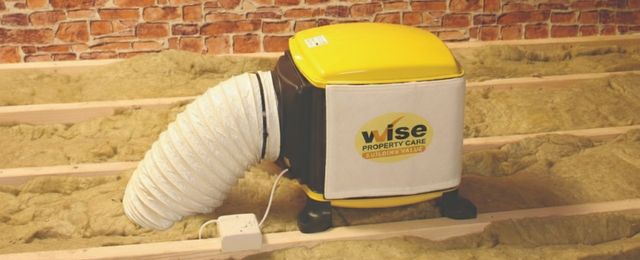
PIV units are often installed in loft spaces and circulate fresh filtered air within the property.
Reducing Condensation
Condensation is caused by warm, humid air condensing on cold surfaces. By reducing the humidity levels in a property you can reduce the amount of moisture that is able to condense on cold surfaces. This in turn means less potential for mould growth to form.
Improving Air Quality for Homes in Scotland
PIV units will improve the indoor air quality for those living within the property, and can reduce mould spores, dust mite allergens and volatile organic compounds (from cleaning products, hair spray, deodorant and scented candles), which can contribute to asthma symptoms.
Long term exposure to mould spores can cause issues for a person who is immunosuppressed, very young or elderly, or who has specific allergies. In some cases it can cause health effects such as coughing, wheezing or sore throats.
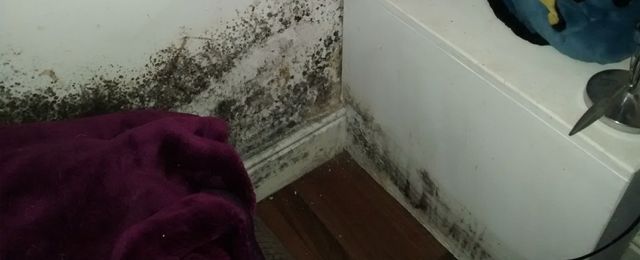
Items up against cold outside walls prevent good air circulation, causing condensation and mould.
Types of PIV Systems
Loft Mounted Units:
A loft unit is fitted in the roof void, ducted via an air diffuser, and is typically mounted in the ceiling above a stairwell. For units fitted with a pre heat facility, the heater control switch is sited on the landing wall to enable the user to switch the heater on or off. The fan speed control can also be set from this position.
These units are designed to be quiet and have an extremely low power consumption rate.
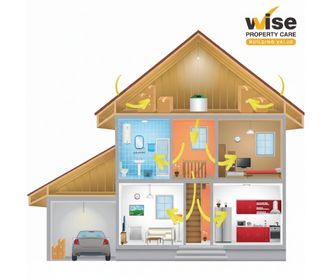
Wall Mounted Units:
Designed for flats or apartments, the unit is fitted on a convenient wall, as close to the air intake point as possible. They are often placed within a hall cupboard, where access to an external wall and ambient air is possible. Supply ducting is then run to an outlet air grille, normally situated in the hall, so that the introduced air is delivered to a central point within the dwelling. This unit is equally as quiet as the loft unit and has a low power consumption rate.
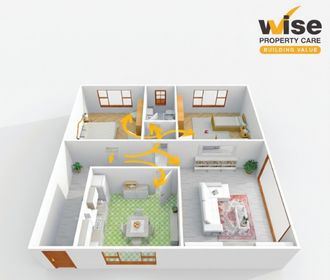
The unit is virtually invisible.
Benefits of PIV systems:
- Alleviates condensation and black mould
- DC motor for quiet operation
- Energy efficient – consumes as low as 6 watts
- Lower energy costs – in keeping with the Government directive regarding energy efficient appliances
- Low maintenance
- Typically non disruptive installation
PIV Installation
Wise Property Care will always carry out a condensation survey to fully assess the property in question before recommending any forms of treatments. This is to make sure we are providing the correct solution to the problem, through expert diagnosis from qualified surveyors.
Once a condensation problem has been confirmed by a CSRT/CSTDB qualified surveyor, we will provide you with a detailed survey report outlining any recommendations, including the installation of PIV units. Our experienced technicians will then install the PIV to the specification detailed in your survey report, this will also include details of a long term guarantee, if applicable.
Why Choose Wise Property Care?
Wise Property Care have been fixing condensation and mould problems and building value back into Scottish properties for over 20 years.
We have a proven track record working with homeowners, social housing and commercial clients across Scotland, delivering effective preservation solutions while ensuring full compliance with industry regulations and health and safety standards.
We are proud members of the Property Care Association (PCA), the trade association that governs our industry. This means you can trust you’re getting professional and honest advice, and treatments following the industry best practice.
Wise Property Care are endorsed by Which? Trusted Trader - meaning our customer service and workmanship has passed rigorous trading standards assessments.
We are also members of Trustmark and are CHAS, Constructionline and Alcumus (SafeContractor) approved.
We are rated ‘Excellent’ on Trustpilot with over 550 independent customer reviews from across our branches in Scotland.
PIV unit FAQs
-
When would you recommend using a PIV unit?
If the type of damp is confirmed to be condensation, PIV units are excellent choices to improve ventilation in homes in Scotland, and would be recommended for properties affected by excessive condensation and mould.
-
Does a PIV unit cure damp and condensation?
Yes, damp caused by condensation can be solved with improved ventilation, with PIV units introducing fresh air into a property, and helping push stale moist air out.
-
How energy efficient are PIV units?
PIV units are typically very energy efficient, especially unheated versions, and can cost a matter of pennies a day to run. Both the wall mounted PIV system and the loft mounted unit are designed with low-power, ultra-low watt motors and controls to keep running costs low.
-
Does a PIV make the house cold?
A PIV unit will draw fresh air into your property from outside, meaning the fresh air will mix with the air already in the atmosphere, and will be warmed by it. If a property has the correct balance of heating and insulation the heat loss will be minimal, and the overall environmental benefits should prove worth the small additional costs of heating.
-
Is PIV better than a dehumidifier?
Yes, a PIV unit will provide ventilation to the whole property, forcing moisture laden air out and reducing humidity. This provides a long term solution to the condensation problem. A dehumidifier will simply remove moisture from the atmosphere and is localised to a specific area in the property. PIV systems are more energy efficient and can be a much more cost-effective treatment for condensation and mould problems.
-
Do PIV units use a lot of electricity?
No, they are designed for low electricity usage, consuming minimal energy.
-
Do PIV units make the loft damp?
No, when a PIV system is installed correctly by a trained professional they will make sure the unit has proper ventilation to pull in fresh air and push moist air out of the property. This is why it is important to use a qualified surveyor who can survey the whole property to fully understand the airflow of a building, therefore preventing further issues down the line.


