
For your Local Experts call us on 0808 301 8231 or Contact Us
Basement Sump Pump Installers Scotland
Sump pumps are the ‘beating heart’ of a cavity drainage membrane system used for below ground waterproofing. They are used to remove water collected from perimeter drains by pumping it away, and can be designed with high water level alarms and battery backups for added protection. Sump pumps come in different sizes, depending on the type of project.
Hidden beneath the floor in a plastic sump, they remain out of sight, continuously protecting a basement from the risk of flooding.
Waterproof membrane systems incorporating sump pumps can be used with other types of waterproofing such as tanking slurries and paints, to create a dry internal space. This helps meet the requirements set out in British Standard 8102, the industry standard for below ground waterproofing.
Wise Property Care are on hand to help design and install basement waterproofing systems incorporating sump pumps as part of a waterproof membrane system, and to meet BS 8102.
We have a number of Certificated Surveyor in Structural Waterproofing (CSSW) qualified surveyors operating across Scotland, who can provide advice and work closely with you from the initial survey to the waterproofing design process, and then through to installation.
What are Sump Pumps and how do they work?
A sump pump is the name for a large plastic container that is built into the floor slab of a below ground space, which houses pumps that are used to remove water from the structure. They are typically used as part of a cavity drainage membrane system, known as Type C waterproofing.
Drainage channels collect water which then seeps into the sump chamber, and pumps within remove it away from the property, preventing the below ground space from flooding. Sump pumps come in various sizes and shapes, and are extremely robust and durable. They are not designed to run continuously, but are operated by a float switch as the water level rises within the sump.
They will often contain a main pump along with a back up pump for an extra layer of protection, set at different heights within the sump chamber.
They can also be installed with high water level alarms to alert you to any problems, and a battery backup to ensure unhindered operation during power outages. Access for maintenance is required, so they are usually placed under a hatch for regular maintenance by a technician.
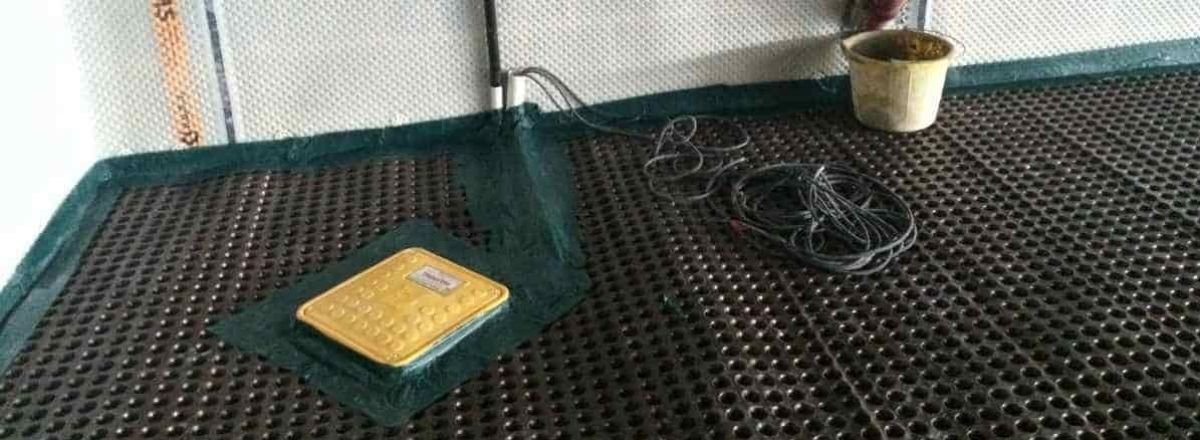
A sump pump is part of a cavity drainage system, with the sump chamber installed into the floor slab below.
Sump Pumps - Type C Waterproofing
Sump pumps are used as part of a wider waterproofing system, known as a Type C cavity drained membrane system. It works by waterproof membranes installed onto walls and floors collecting moisture that seeps through the surrounding surfaces. The gap between the surface and the membrane depressurises the moisture and diverts it to a drainage system around the perimeter of the structure. This then directs it to the sump pump system, which removes it from the property via a discharge pipe.
A Type C system is designed to allow moisture to enter a managed drainage system, controlling the moisture ingress in a way that is seen as a ‘failsafe’ option for waterproofing. These systems can handle high levels of ingressing moisture, and even flooding when designed correctly, but are not designed to hold a head of water.
They can also be scaled up in size, making them perfect for large projects, with multiple sump pumps and drainage channels across one system. This makes them a versatile option for all types of buildings, from domestic basements, cellars in listed buildings and large commercial spaces.
To meet the requirements of British Standard 8102, Type C systems are often used with other types of waterproofing, such as waterproof tanking slurries to provide two forms of waterproof protection.
A qualified CSSW surveyor should be involved during the design process in order to design a system fit for purpose.
Perimeter drainage channels
A sump pump system relies on the perimeter drainage system to collect and direct water that has been depressurised in the void behind the waterproof membrane. They are installed at the wall floor joint and can be cut into an existing floor slab, or where a new floor slab is installed, channels can be incorporated.
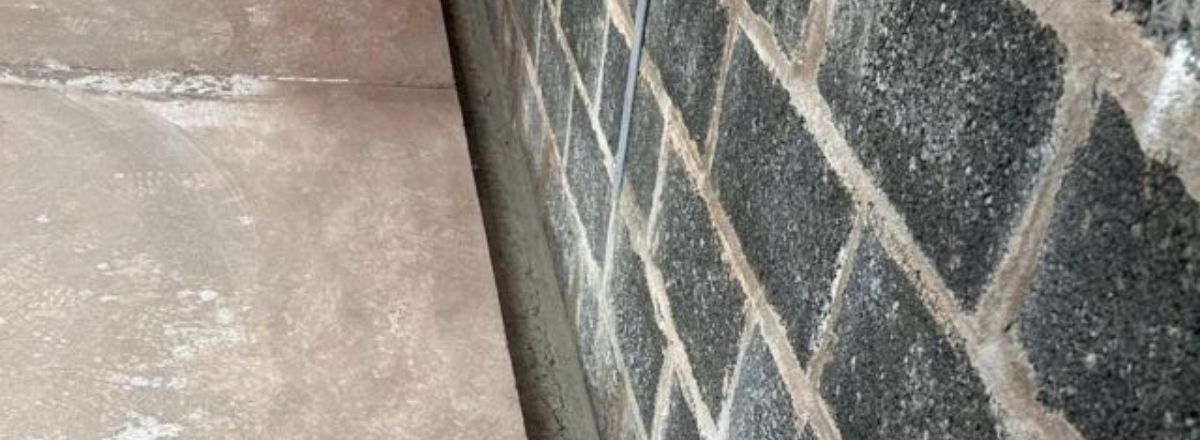
Channels can be pre-cut or designed as part of a new floor slab.
Channels should not be more than 25m in length before a discharge point, in order to prevent blockages. Some basements may require multiple channels or extra sump pumps in order to provide an effective water management system.
Typically corners will include an inspection port to facilitate inspection and regular maintenance. These can be used to prevent blockages including lime build up. Anti-lime treatments can be used to prevent this.
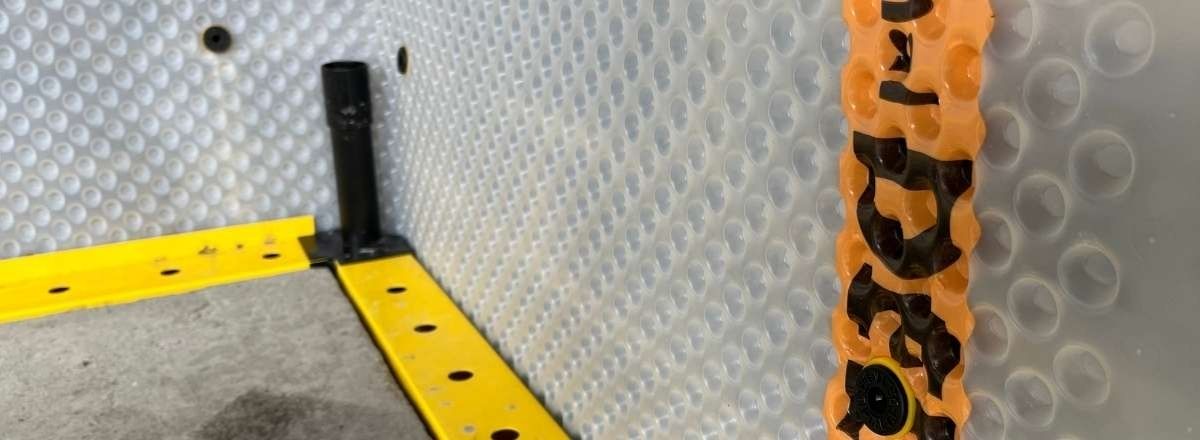
Access point in a corner allows for regular inspection and maintenance to be carried out.
It is important that a cavity drainage system is designed by a qualified and experienced professional. Wise Property Care have a number of CSSW qualified surveyors who can design a system to meet the industry standard for below ground waterproofing - BS 8102.
How are Sump Pump Systems installed?
The size of a sump pump and the layout of the drainage system will depend on the size and complexity of the structure in question, making it important to use a CSSW qualified surveyor when designing a system.
The surveyor will provide you with a survey report outlining their findings, the type of waterproofing required to maintain a habitable space and details on the size and specification of the sump pump.
The first step during the installation of a Type C system is to excavate a sump pit in a suitable location, along with the perimeter drainage channels. This can be cut out of an existing floor slab or can be built during the installation of a new slab.
The sump chamber is installed and concreted into place, before the pumps are installed into the chamber. Drainage channels will direct water into the sump pump, typically with two connections into the chamber. Inside the sump, two pump floats are set at different levels with one acting as standby, alongside a further float set to activate the high water level alarm.
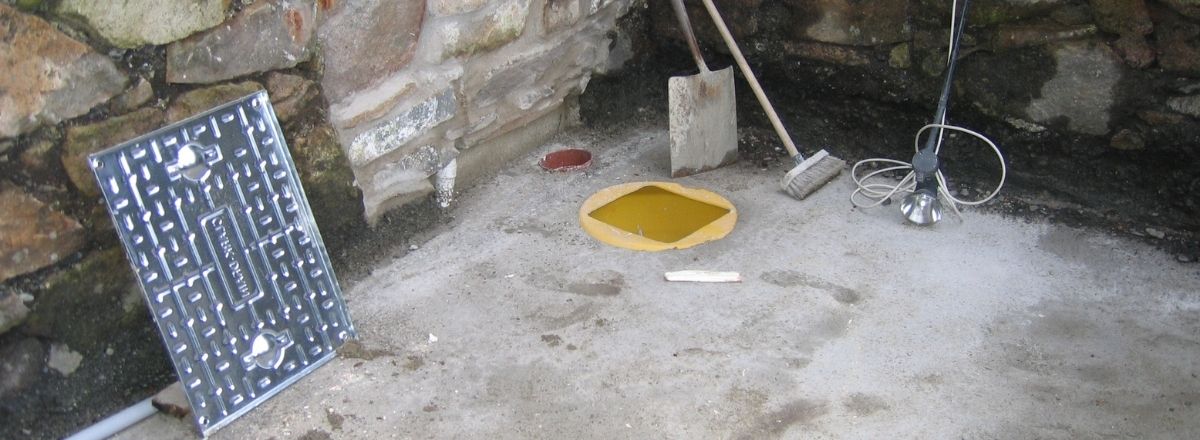
The sump chamber is built into the floor slab of the basement, before being concreted into place.
As these systems require ongoing maintenance, sumps are fitted with an access cover for servicing. Before final sign off, the system is flood tested to confirm operational integrity
The pumps, alarm and battery backup units should be serviced annually as a minimum to maintain their effectiveness. Details of this will be in the survey report provided.
Sump Pump Alarms and Battery Back Ups
For another layer of protection, high water level alarms and battery back ups should be included as part of the design. Battery backups allow for continuous power supply in the event of a power supply failure. The duty pump will draw power from the battery which will have been fully charged during normal operation. The battery will recharge when mains power returns. If there is a power cut your below ground space is protected, even if this is during a period of heavy rainfall or flooding.
High water level alarms are designed to offer the highest level of protection for basement groundwater pumps and sump chambers. It not only provides an alarm to give an early warning that there may be a problem if water in the sump chamber rises above a pre-set point, but can additionally be an active pump monitoring system when connected to wifi. Alarm outputs can be provided to visual and audible outputs on site, to landlines, mobile phones and email.
Twin pumps, alarms and battery backup can be a requirement of independent warrantee/insurance providers.
Professional Waterproofing Services Across Scotland
If you are looking for a company who can design and install Type C systems, including sump pumps, we are here to help. Wise Property Care have a number of CSSW qualified surveyors with the knowledge and experience to design waterproofing systems fit for purpose.
We regularly work with homeowners, architects, contractors and builders to design long lasting systems across Scotland.
Our surveyor will be involved from design to completion, providing a system that meets British Standard 8102 - the industry standard for below ground waterproofing in Scotland.
Wise Property Care are approved installers of Delta, Koster, Newton and Safeguard waterproofing products, and all of our technicians undergo rigorous in-house and onsite training in order to be able to qualify as a trusted partner.
Why Choose Wise Property Care?
-
Fully qualified surveyors and expert technicians with the experience required to provide advice and install waterproof membrane systems.
-
Our frontline CSSW qualified surveyors are supported by our national waterproofing division with over 27 years of waterproofing experience.
-
All products used undergo an extensive testing process by the manufacturers to attain BBA/BDA certification.
-
We regularly work with contractors and builders to design a tailored basement waterproofing system to suit your needs, helping you step-by-step from design to completion.
-
Our cost-effective techniques mean the installed systems will control the moisture entering the building structure, with the correct ventilation system in place.
-
Wise Basement Systems as part of Wise Property Care are proud members of the Property Care Association (PCA), a Which? Trusted Trader, CHAS and Safecontractor approved.
-
We are rated ‘Excellent’ on Trustpilot with over 550 independent customer reviews from across our branches in Scotland.
-
All installations that comply with the BS8102 standard carry a 10-year guarantee - giving you long term protection against water ingress.


