
For your Local Experts call us on 0808 301 8231 or Contact Us
Mould on Asbestos Ceilings
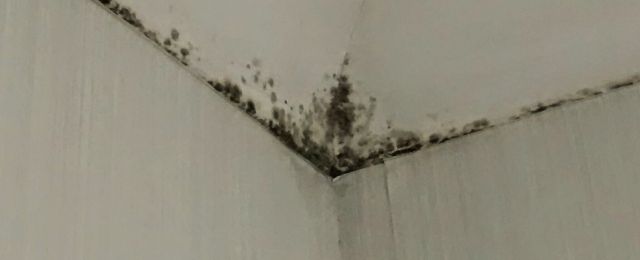
Mould growth in homes across Scotland is often caused by a condensation issue, with as many as one in five properties affected every year. Often mould problems can be removed using common household cleaning products, but if the problem is occurring on asbestos containing materials such as some types of textured coating, you should take much more care.
While asbestos was banned as a building material across Scotland in 1999, it does mean that any property built before then could contain asbestos products. Many common building materials used in construction are made of asbestos, including products used in homes.
In order to deal with both the asbestos and mould problem, there are a number of steps required.
We have put together some advice on how to safely and effectively remove mould from asbestos materials, while dealing with the mould problem. This will allow your property to remain fit for purpose long term.
Asbestos in the Home
Asbestos was often used for fireproofing and insulation, meaning that many homes may have textured ceiling coatings known as Artex, vinyl floor tiles or asbestos cement roofing panels. The most common materials containing asbestos are decorative textured coatings, which are often found in bathrooms or on ceilings and walls.
- In bathrooms, asbestos products can include bath panels, pipe boxing, and insulation in lofts or under floorboards.
- In walls and ceilings, it is primarily present in wall panelling and asbestos insulation board panelling in cupboards.
The Health and Safety Executive state that mould growth is a common problem found on asbestos ceilings and walls, or Artex finishes. Because of the risks associated with asbestos, when mould is found on surfaces it should be handled with care to avoid exposure to asbestos fibres. Asbestos can be far more hazardous than mould.
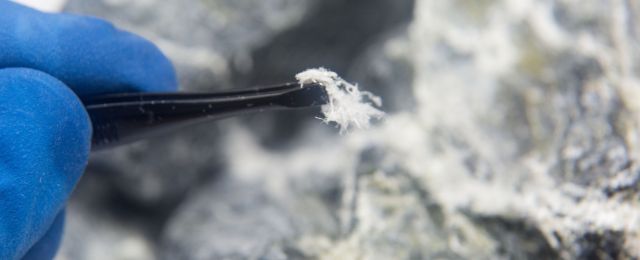
When materials that contain asbestos are disturbed or become damaged, asbestos fibres are released into the environment. These fibres can then be inhaled which can cause very serious diseases, including mesothelioma, asbestosis and asbestos-related lung cancer. That said, where asbestos is present and in good condition, it generally poses no health risk when left untouched.
Despite this, many homeowners or property owners often remove asbestos as a precaution.
The removal of asbestos by a landlord or a housing association falls under the Control of Asbestos Regulations 2012, which is under the enforcement of the Health and Safety Executive (HSE).
If you are planning to make any DIY home improvements, repairs, or maintenance this work must be conducted by workers who are competent and trained in either non-licensed or licensed asbestos work.
What Causes Mould to Form on Asbestos Surfaces?
Mould and condensation will form on asbestos surfaces when they are cold, as warm air circulating inside a property condenses, turning vapour into liquid. Sometimes textured decorative coatings are applied to concrete ceilings and these become a cold bridge on which condensation forms.
Condensation occurs naturally in homes from everyday tasks such as cooking and cleaning. These activities produce moisture which circulates around the property, unless there is adequate ventilation.
When walls and ceilings become wet and mould growth occurs, this indicates a serious problem with condensation which requires improvements to ventilation and the thermal efficiency of surfaces.
How to Deal with Mould on Ceilings and Walls which could contain Asbestos?
If condensation has caused mould to form on asbestos containing materials, any unlicensed work must stop immediately.
A risk assessment must be carried out to determine whether such works require a licensed contractor. If the risk assessment states the problem is severe enough then a competent organisation should be employed to remove such materials appropriately. This ensures that work is conducted in accordance with industry guidance and legislation.
This will mean the occupants of the property, and the workers removing the asbestos are safeguarded, and that the works have been conducted effectively.
They will use the correct methods and safety precautions to remove the hazardous material safely, stopping harmful asbestos dust and fibres spreading throughout the property.
Dealing with Condensation
Once the asbestos products have been removed, you must then address the condensation problem inside the property.
This can be done by increasing the amount of ventilation inside a property, maintaining constant heating and making improvements to the thermal efficiency of walls and by increasing insulation. You will then be able to control the amount of excess moisture inside your home, especially during the winter months when condensation is most common.
Ventilation can be improved by installing and regularly using extractor fans, trickle vents and PIV units to help remove excess moisture.
Cold spots on walls and ceilings provide a surface for warm moisture to condense, so improving the thermal efficiency of these areas can help prevent the issue.
Anti condensation paints or thermal plastering can be used for solid wall constructed properties as these products work by removing the cold bridge on which condensation can form.
If mould and condensation is forming on ceilings, it may be because the roof space above is uninsulated or the ceiling is solid concrete. Improvements to the levels of insulation in the roof space above will prevent the ceiling being a cold bridge.
Next Steps
If you are worried about mould forming on asbestos surfaces in your property, or housing stock you manage, the first step is to get the surfaces tested for asbestos. This will provide you with the required information on what to do next. If you require specialist help for a damp problem, Wise Property Care have a number of specialist surveyors who can provide advice and recommendations specifically for damp, condensation and mould.
Wise Property Care have both CSRT (Certificated Surveyor in Remedial Treatments) and CSTDB (Certificated Surveyor of Timber and Dampness in Buildings) qualified surveyors operating from a network of local branches - meaning no matter where you are in Scotland, we have a surveyor local to you.
- Wise Property Care have been fixing condensation and mould problems and building value back into Scottish properties since 1996.
- We have a proven track record working with homeowners, social housing and commercial clients across Scotland, delivering effective preservation solutions while ensuring full compliance with industry regulations and health and safety standards.
- We are proud members of the Property Care Association (PCA), the trade association that governs our industry. This means you can trust you’re getting professional and honest advice, and treatments following the industry best practice.


