Rated Excellent on Trustpilot for our Customer Service
Delivering Property Repair Treatments across Scotland for over 25 years
Waterproof Membrane Installers - Scotland
Waterproof membranes can be used as part of a waterproofing system to turn damp below ground structures into habitable living spaces, while increasing the value of the property.
Walls and floors can be covered with waterproof membranes to direct water into perimeter drainage channels, which then remove the water via sump pumps or gravity led outlets. This type of waterproofing system is known as Type C waterproofing - or a cavity drainage membrane (CDM) system.
Waterproof membrane systems can be used with other types of waterproofing such as tanking slurries and paints, to create a dry internal space. This helps meet the requirements set out in British Standard 8102, the industry standard for below ground waterproofing.
Wise Property Care are on hand to help design and install basement waterproofing systems using waterproof membranes as part of a CDM system, and to meet BS 8102.
We have a number of Certificated Surveyor in Structural Waterproofing (CSSW) qualified surveyors operating across Scotland, who can provide advice and work closely with you from the initial survey to the waterproofing design process, and then through to installation.
Cavity Drain Membrane Systems
Cavity drain membrane systems use waterproof membranes to create a water management system. Rather than preventing moisture entering a property, it uses a series of membranes, drainage channels and a sump pump system to control moisture and remove it from the structure.
CDM systems are seen as a ‘failsafe’ option for below ground waterproofing, as they can deal with significant moisture penetration and even flooding if designed correctly.
They can be used on a range of projects from new builds to basement conversion and large commercial projects. Because the membranes can be removed at any point, they are a useful option for listed buildings.
Membranes can be installed to stonework, brickwork, blockwork or concrete walls, ideal for basement waterproofing and cellar conversions in older properties.
Type C Waterproofing and BS 8102
Type C waterproofing is often used in conjunction with other types of waterproofing in order to create a ‘combined waterproofing system’ necessary to meet BS8102 guidelines and to mitigate the risk of failure.
This lowers the risk of the waterproofing design failing as two types of waterproofing have been installed. It is also often a requirement of secondary insurance warrantee providers.
A Type C system is seen as the most reliable and risk free type of waterproofing, allowing for a contingency plan for internal environments that must be kept 100% dry, through a maintainable and accessible system.
Type C waterproofing is made up of three components - waterproof membranes, perimeter drainage channels and a sump and pump system.
Wise Property Care will typically design and install waterproofing systems using a combination of a Type A waterproof tanking system and a Type C waterproof membrane system.
Waterproof membrane will cover walls and floors in order to depressurise and direct moisture into drainage channels built into the floor slab
What are Waterproof Membrane Systems and How Do They Work?
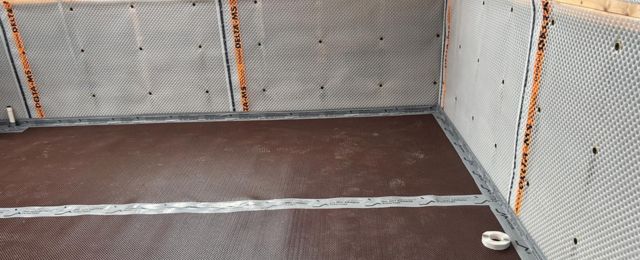
Waterproof membranes create a continuous watertight layer of material fixed to the wall and floor, that prevents moisture from entering the internal environment, whilst channelling the water behind the membrane to drainage channels.
The waterproof membrane itself comes in large rolls and is made from high-density polyethylene, designed to withstand changes in seasonal temperatures and exposure to moisture.
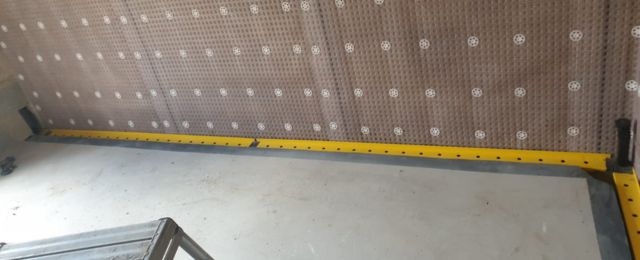
Waterproof membranes are fixed to the wall using watertight self-sealing fixing plugs and laid across floors, then sealed using waterproof tape.
They come with different sized studs, but a typical waterproofing system will use studs 8mm deep for walls, and 20mm deep for floors. The studs create a cavity for moisture to run into the drainage system.
Moisture is depressurised as it exits the masonry and is directed away by the perimeter drainage channels, manoeuvring water to drain away by gravity or to a sump pump, before being discharged to a suitable location. Depressurisation and pumping to waste is critical to the design, as the system is not designed to hold a head of water under the membrane, unlike cementitious tanking.
Drainage channels are installed into the floor slab, and will include inspection ports for regular maintenance and to check for blockages. Access is also critical to design as the Type C system will be concealed by floor coverings, plaster or boarding.
Sump pumps can come in different sizes depending on the project, and are essentially a large plastic container with a main pump and a back up pump situated inside. They are used to remove water away from the property, and can be fitted with high water level alarms, as well as battery back ups in case of power failure during periods of high rainfall or bad weather.
A cavity drainage system utilising waterproof membranes will create an internal space that is completely dry, with the membrane system surrounding the space, collecting and removing water away from the property. The membrane system is hidden out of sight behind drylining and plasterwork. Thought must be given to heating and ventilation requirements to prevent the risk of condensation forming. If the basement is a habitable space, excess moisture from occupation must be removed.
Type C systems do require regular maintenance in order to keep the system working as intended, and membranes must not be punctured or the system can fail.
Despite this Type C is seen as one of the most effective ways of keeping below ground spaces dry, especially as part of a combined waterproofing system designed to BS 8102.
Preparation and Waterproof Membrane Installation
Our technicians will first prepare the surface of walls by removing any deteriorated plaster or render. Any defects in the wall through which there is rapid water flow will be sealed to prevent excessive pump running.
They will then cut the sheets of membrane to size, before they are applied to the floors and walls. Joints are sealed with butyl tape in order to create a fully waterproof system. The membrane system must be completely sealed in order to prevent moisture penetration and system failure.
Floor membranes have a deeper stud compared to wall membranes, which helps provide extra drainage capability. A concrete screed or a chipboard flooring can then be laid directly onto the membrane.
The membrane is fixed to the wall using watertight self-sealing fixing plugs that can accommodate a screw for subsequent installation of any dry lining systems.
Perimeter Drainage
Drainage channels are installed into the floor slab around the perimeter of the basement.
They are either installed into the existing floor slab, or a new floor slab incorporating drainage channel rebates.
Sump Pumps
The sump pump is installed into the floor slab and concreted into place. A sump pump is a large plastic tub which contains the pumps used to remove water from the system. For added protection they are often protected with high water level alarms and battery backups which are installed in a convenient location.
Inspection hatches are installed where sump pumps are located for easy access, along with investigation ports for the perimeter drainage system.
Ongoing Maintenance
While waterproof membrane systems do require regular maintenance, the reliability of the system makes them a worthwhile investment. The system must be free from lime build up which over time can block drainage. Anti lime treatments are required to prevent this.
Sump pumps will also need to be checked and serviced annually, as well as tests to the battery backup and alarm systems. These systems allow continued operation in the event of a power supply failure so it is important to make sure they are in full working order.
Expertise and Quality Control
When carrying out below ground waterproofing it is imperative that you use a competent, experienced and trustworthy installer in order to prevent mistakes during the installation process.
If the wrong sized sump pump system is used or the membrane is punctured or waterproof tape is incorrectly installed it can lead to system failure, water ingress and extremely expensive remedial works being required.
Wise Property Care maintain a thorough quality assurance process, with regular checks throughout the installation process. Our technicians are experienced in using waterproof materials, with our teams regularly carrying out waterproofing installations across Scotland.
Fully qualified surveyors and expert technicians with the experience required to provide advice and install waterproof membrane systems.
Our frontline CSSW qualified surveyors are supported by our national waterproofing division with over 27 years of waterproofing experience.
All products used undergo an extensive testing process by the manufacturers to attain BBA/BDA certification.
We regularly work with contractors and builders to design a tailored basement waterproofing system to suit your needs, helping you step-by-step from design to completion.
Our cost-effective techniques mean the installed systems will control the moisture entering the building structure, with the correct ventilation system in place.
Wise Basement Systems as part of Wise Property Care are proud members of the Property Care Association (PCA), a Which? Trusted Trader, CHAS and Safecontractor approved.
We are rated ‘Excellent’ on Trustpilot with over 550 independent customer reviews from across our branches in Scotland.
All installations that comply with the BS8102 standard carry a 10-year guarantee - giving you long term protection against water ingress.