
For your Local Experts call us on 0808 301 8231 or Contact Us
Waterproofing Design Specialists - Wise Property Care
If you are thinking about a basement conversion on your property, the design and installation processes are important to get right in order to keep the below ground space dry and fit for purpose. Waterproofing below ground spaces is a complex procedure that requires knowledge and experience to get right - so you want to work with professionals who will get it right first time.
Wise Property Care are the go to company for basement waterproofing in Scotland. We have CSSW qualified surveyors working out of our network of local branches. We will design and install the systems to adhere to the industry standards and guidelines - including British Standard 8102.
We are so sure of our design and installation process that any basements that comply with BS 8102 standards carry a 10-year guarantee - giving you peace of mind your below ground space is fit for purpose long term.
Understanding BS 8102 (British Standard 8102:2022) Standards for Waterproofing
BS 8102:2022 is the Protection of Below Ground Structures Against Water Ingress - Code of Practice and is the predominant document for design of basement waterproofing in Scotland and the United Kingdom but is not the only reference document used in our design process, Both BS85500 - relating to flood protection and BS8485 relating to ground gases also play their part in the design process.
BS8102 is used to provide recommendations and guidance to prevent moisture ingress from the surrounding ground into a below ground structure. It is the framework put together in this document that ensures a basement waterproofing design is justified and used to ensure a robust waterproofing system is designed and installed.
NHBC Chapter 5.4 - Waterproofing of Basements and Other Below Ground Structures
The National House Building Council launched a campaign focusing on issues relating to basement waterproofing design and construction because of the number of claims on properties with defective waterproofing. It was used to describe when below ground waterproofing systems are required, and that the design process should be undertaken by a qualified waterproofing expert - such as the ‘Certified Surveyor in Structural Waterproofing’ accreditation. It also covered what types of products can be used and the inclusion of back up pumps, alarms and battery backup systems, when required.
Local Authority Building Control Technical Manual
Another guideline used during the design and installation of below ground waterproofing is the LABC Technical Manual covering general requirements and the types of waterproofing systems, and the requirement for any work to be carried out by an approved installer. This reinforces the guidelines put in place by BS 8102.
Basement Waterproofing Design Factors
Based on the guidance from reference materials, when deciding on waterproofing solutions we must take into consideration the form of the structure, the end use for the internal space, and the level of risk involved. BS 8102:2022 table 2 describes the degrees of watertightness in relation to achieving the required internal environmental conditions.
Grades of Waterproofing Protection
Depending on the end use of the internal space, different grades are used to determine the acceptable level of moisture ingress, with higher grades requiring more robust waterproofing systems, especially for residential spaces.
Grades of Waterproofing Protection (BS 8102:2022 - Table 2)
Grade 1 Waterproofing
-
Typical Usage Car parking, plant rooms (excluding electrical equipment), workshopsPerformance Level
- Grade 1A: Seepage (slow transmission of water) and damp areas (slightly wet but no seepage). Both internal and external sources are tolerable if they don’t impact the proposed use.
- Grade 1B: No seepage, but damp areas (slightly wet but no transmission). Internal and external sources are tolerable. This means free water is not allowed to enter but damp patches may occur.
Grade 2 Waterproofing
-
Typical Usage Plant rooms and workshops requiring a drier environment (than Grade 1), storage areasPerformance Level No water penetration is acceptable. Damp areas tolerable, ventilation might be required.
Grade 3 Waterproofing
-
Typical Usage Ventilated residential properties. Commercial areas, including offices, restaurants, and leisure centresPerformance Level No water penetration is acceptable. Ventilation, dehumidification, or air conditioning necessary, appropriate to the intended use.
At the early stages of a project it is important to define what environmental grade you are looking to achieve in any given area, typically grade three for a domestic basement conversion. The waterproofing design should be appropriate to the risk and generally assume exposure to a full height of water during the design and life of the building.
Where Grade three protection is required, and the site conditions dictate or the risk of failure is high, the waterproofing design should include a combination of two of the types of waterproofing systems.
Wise Property Care will be able to assist with the waterproofing grade required during the design process, working closely with architects, if required.
British Standard 8102:2022 - Types of Waterproofing Systems
Once the purpose of the below ground waterproofing has been established, the next step is deciding on the waterproofing techniques to achieve the grade required. BS 8102 defines three types of below ground waterproofing:
Type A - Barrier Protection
Type A barrier protection is used to lock down a structure typically by the application of a waterproof material directly onto walls and floors in a process often known as tanking. This can be applied internally or externally, depending on the structure in question. They can either be applied as a paint like tanking slurry or a plastic sheet barrier. They are often referred to as pre-applied or post-applied Type A membranes.
External Waterproof Tanking
External Type A waterproof tanking is often used for new build designs as there needs to be access to the external face of walls and floor slabs. A barrier is created and then walls are often protected using a protection membrane often utilising geodrain protection membranes or closed cell insulation. Type A - pre applied fully bonded membranes are usually specified to waterproof new floor slabs and are sometimes hydrophilic in that they self heal should damage occur prior to installation of the slab, it is also critical that they are continuous with the waterproofing of the walls to provide continuity of the system.
When installing Type A systems onto existing structures you need to take into account the increased stresses on the structure, a Wise Property Care qualified surveyor will be able to assist during this process.
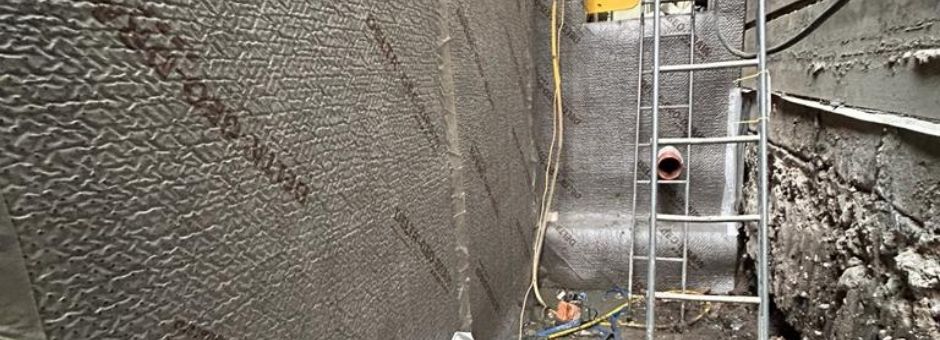
Internal Waterproof Tanking
For internal waterproofing for a Type A system a chemically engineered slurry is used to create a watertight bond, and therefore blocking moisture ingress. It can be applied to the floors or walls of an existing below ground structure, making it a very versatile option for below ground waterproofing, this is of course subject to the structure itself being suitable to tanking.
Type B - Structurally Integral Protection
Type B waterproofing involves the body of the structure itself being constructed as an integral water resistant shell and therefore able to prevent moisture ingress. This is typically done through the use of concrete structures.
It is important that professionals design a system that takes into account construction joints and cracks in order to limit potential failure. Where possible construction joints should be designed out but where unavoidable, construction joints should be detailed/waterproofed with appropriate waterstops such as water bars.
Type C - Cavity Drained Protection
Type C systems work differently from Type A and Type B in that instead of holding back water pressure they use air voids to depressurise the ingress and then manage the moisture. This means that Type C is essentially a ‘water management system’ that uses a combination of waterproof membranes and hidden drainage channels to manoeuvre ingress away from the below ground space, typically through a sump pump.
Wise Property Care would recommend a Type C system for most basement and cellar conversions we come across in Scotland, due to their versatility and reliability.
Type C - Tanking Membranes
Type C tanking membranes are sometimes referred to as damp proof membranes, or waterproofing membranes, and are plastic materials that are used to create a waterproof layer installed directly onto damp walls.
They are usually made up of high-density polyethylene and are designed to withstand changes in seasonal temperatures and exposure to moisture. Membranes have differing sized studs, but typically for walls they are 8mm thick, and floors 20mm thick - creating a cavity for moisture to run into the drainage system.
They are versatile and flexible, and can be installed onto stonework, brickwork, blockwork or concrete walls - perfect for various Scottish architectural styles.
Basement Waterproofing Membrane Systems
Membranes are installed onto floors and walls, and joints are sealed with butyl tape in order to create a fully waterproof system. A small gap between the wall and the membrane is used to guide any moisture, which is then fed into hidden drainage channels and diverted away from the property through gravity drains or a sump pump.
Sump pumps are designed in each instance to handle significant amounts of water, preventing water from entering the internal space, they are protected with high water level alarms and battery backups which can be remotely monitored if required - therefore protecting furnishings and stored items from damage. Systems can be tailored to the specific needs and designs of a property.
The internal wall finishes can be either a plasterboard dry lining system or plastering directly onto the membrane. Floor finishes are either screeded or timber boarded. It takes great care and skill to ensure the system is designed and installed correctly, as faults will allow for moisture to penetrate through the membrane. Membranes can be punctured during the installation process by untrained professionals or follow on trades.
At Wise Basement Systems we take great pride in our design and installation service with all works backed by our quality assurance process ensuring peace of mind for our customers. You should always use a trained and qualified professional to design a waterproofing system as inexperienced installers can make mistakes that lead to extremely expensive remedial works being required.
Cavity Drainage Channels
A Type C membrane system depends on maintainable cavity drainage channels to divert and discharge moisture. These are usually installed into the floor slab around the perimeter and direct ingress into sump champers or gravity led drains. Drainage runs should never be more than 25m in length before reaching a discharge point, and should always include inspection ports, in order for inspection and where required maintenance.
When designing a Type C system, the layout of the cavity drainage channels are designed by CSSW qualified surveyors in accordance with regulations. This is to prevent blockages or inefficiencies. Anti-lime treatments are used to prevent blockages over time.
Sump Pumps
Cavity drainage channels will either divert ingress to a gravity led outlet, or in most cases will divert moisture to a sump pump.
The sump pump is responsible for discharging the ingressing water from the below ground space, and is a key element of a Type C system. Water collected and diverted from the membrane system and perimeter drainage system is channeled to the sump chamber which then pumps the moisture away from the property safely. Sump pumps come in various sizes and designs, and should always house at least two pumps (a primary and secondary backup pump), increasing the efficiency of the system.
Pumps are robust and extremely durable and are installed into a specially constructed sump chamber in the floor or the below ground structure. They should be installed with high water level alarms to alert you to any issues, and a battery backup to ensure unhindered operation during power outages. Access for maintenance is required, so when they are installed technicians will place them in a location that makes this possible.
Advantages of a Cavity Drain Membrane System
The main advantage of a Type C membrane system is that it is flexible and can be tailored to the specific needs of a property, taking into account the size, layout and characteristics of a below ground space. The system does not add load onto the fabric of the structure, meaning it is perfect for remedial waterproofing on existing structures. It is also a reversible system making it the go to choice when specifying waterproofing in listed buildings.
When installed by experienced technicians it provides a robust waterproofing system with inspection points that can be maintained over the lifespan of the system.
Wise Property Care qualified surveyors will design a waterproofing system that will comply with BS 8102 standards, meaning it is backed by a 10-year guarantee. However in reality it will likely last many years longer subject to the appropriate maintenance.
Waterproofing Designs - Combinations and techniques
When a system requires Grade 3 protection (as defined within BS 8102:2022), which would cover habitable spaces for residential and commercial purposes, a combination of two of the above types of waterproofing systems is often required based on risk.
In most cases the safest combination will include a Type C internal cavity drain membrane system as one of the forms of waterproofing - the usual configuration carried out by Wise Property Care is a combination of Type A and Type C systems. The choice of the other system is largely dictated by the type of structure and this can be discussed during the waterproof survey with a CSSW qualified surveyor.
Why Choose Wise Property Care for below ground waterproofing in Scotland?
-
Wise Property Care have full coverage across Scotland with a number of surveyors with the nationally recognised ‘Certificated Surveyor in Structural Waterproofing (CSSW) qualification - this means they have the right training and knowledge to advise on all aspects of waterproofing design and installation.
-
Our frontline CSSW qualified surveyors are supported by our national waterproofing division with over 27 years of waterproofing experience.
-
We can work with contractors and builders to design a tailored basement to suit your needs, helping you step-by-step from design to completion.
-
Wise Basement Systems as part of Wise Property Care are proud members of the Property Care Association (PCA), a Which? Trusted Trader, CHAS and Safecontractor approved.
-
We are rated ‘Excellent’ on Trustpilot with over 550 independent customer reviews from across our branches in Scotland.
-
All installations that comply with BS8102 standard carry a 10-year guarantee - giving you long term protection against water ingress.
We have full coverage of Scotland from our network of local branches:
Waterproofing Design FAQs:
-
Who designs waterproofing?
For below ground waterproofing, designs are created by a CSSW qualified surveyor, with in-depth knowledge of BS8102:2022. Due to the complexity of waterproofing, and the risks involved, a trained professional should be appointed at the earliest opportunity when considering a waterproofing system. They will work closely with architects or engineers to provide a system fit for the structure and environment.
-
How much does professional waterproofing cost?
The costs involved in below ground waterproofing depends on the size, complexity and nature of the system involved, and will differ greatly. To fully understand the costs involved it is advised to have a waterproofing survey carried out by a CSSW qualified surveyor to provide options for your below ground space tailored to your budget if required.
-
How long does waterproof tanking last?
Waterproof tanking can last for decades when installed correctly and in the right conditions. Material quality, environmental factors and regular inspections and maintenance will also factor in the length of time the tanking lasts. When combined with a Type C system as part of a combined system to BS8102 guidelines, Wise Property Care will provide a long term guarantee of 10 years - however in reality it will likely last many years longer subject to the appropriate maintenance.