8 Signs Your Basement Needs Waterproofing
Find out more

For your Local Experts call us on 0808 301 8231 or Contact Us
Basement conversions are a popular way to transform unused space into a comfortable, habitable room, whether for a home gym, office, or extra storage, without the need to move. In cities such as Glasgow, Edinburgh, Aberdeen and Inverness this can add significant value to your property, making them a smart and worthwhile investment.
With branches throughout Scotland, Wise Basement Systems offer a localised and personal service with our qualified team having many years experience working with waterproofing systems.
We have local surveyors who are CSSW qualified who can provide advice and work closely with you from the initial survey to the waterproofing design process, and then through to installation. Our systems are designed to British Standards 8102 - the industry standard for below ground waterproofing in Scotland.
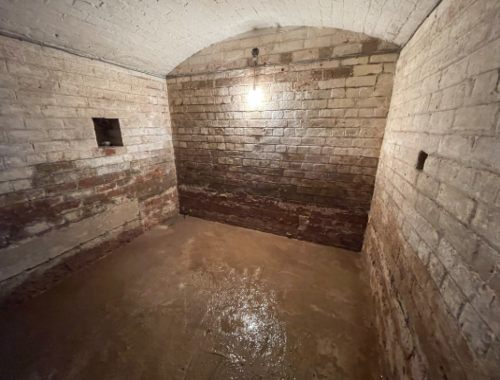
Basement waterproofing is the process of making a below ground space - typically a basement or cellar - into a dry and habitable room through waterproof techniques that prevent moisture ingress penetrating into the internal living space.
Because basement or cellar walls and floors are below ground it’s essential to manage water correctly, as risks of flooding or high water tables can lead to moisture ingress into the property. This can result in an unsuitably damp living space that may also lead to wet and dry rot issues or other structural problems.
You don’t want to place your possessions into a space that is damp or may flood, so it is essential that any structural waterproofing is carried out to the highest possible standards, by a reputable company.
Waterproofing is not exclusive for basements and cellars - many below ground spaces require waterproofing, including car parks, lift pits, buildings with high ground levels abutting the property, and plant rooms. Any building that has walls or floors below ground may require structural waterproofing to create a long term water-tight environment.
Structural waterproofing is a common technique used to prevent lateral penetrating damp from high ground levels, diverting the moisture away through a drainage system.
Help and Advice: - Creating a waterproof basement is the first and most important step for a basement conversion - we can provide specialist advice from start to finish.
Surveys: - One of our CSSW qualified basement waterproofing experts will visit your property to examine the problem and compile a report specifically designed to your needs.
Waterproofing: - Our trained technicians will install the basement waterproofing system, creating a barrier against water ingress.
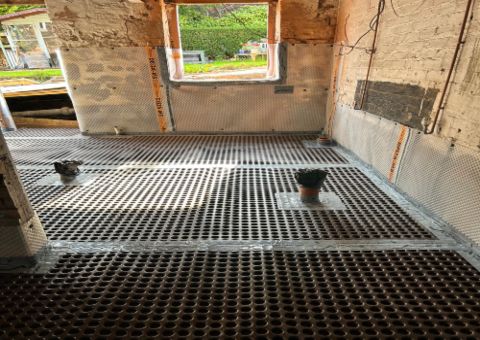
Drainage: - Where drained protection has been recommended, drainage channels are used to ensure water is removed safely. We will install a system to control the moisture, with the correct air ventilation in place.
Finishing: - To finish your basement we can provide flooring and plaster board fittings, ready for decoration and the new lease of life.
Long Term Value: - You can create more space meaning you could add an extra bedroom, study, office, gym, bathroom or even a home cinema to your property - all while adding value to your property.
Protected Long Term: - All Installations carried out by Wise Property Care that comply with BS8102 standards carry a 10-year guarantee.
If you are thinking about a basement conversion in your property, you should deal with a professional company who will design and install the system to British Standard 8102 standards.
It gives recommendations and provides guidance of methods of dealing with and preventing the entry of water from surrounding ground into a structure below ground level.
In order to fully understand the extent of the requirements, a basement waterproofing survey is carried out by a CSSW qualified surveyor who will investigate and provide recommendations. They will check the extent of water ingress levels into the below ground space, assess drainage options and assess any existing waterproofing systems or sump pumps. Factors such as geology, hydrogeology and topography should also be considered.
Because the internal environment of a property is affected by numerous issues, they will carry out an external check to determine if external defects to the fabric of the building may be causing internal dampness, whilst also assessing the need for improvements to ventilation for the below ground space. They will also consider the effects of flooding, and provide recommendations if the basement is in a high risk area.
All findings will be detailed in a survey report, along with recommendations for a basement waterproofing system to BS 8102 standard. Our basement waterproofing systems will fully protect your basement from water ingress, and will be made up of a combination of Type A (barrier protection) and Type C (cavity drained) waterproofing methods, with all works carried out by our trained and experienced technicians. Details of the long term guarantee will also be found in the survey report, if applicable.
Wise Property Care are Scotland’s experts in below ground waterproofing, and will carry out waterproofing to fit your needs. BS8102 states that when waterproofing below ground spaces and risks are deemed high, two forms of waterproofing should be used in order to ensure there is no moisture ingress.
Our basement systems will usually use a combination of Type A (barrier protection) and Type C (Cavity Drainage Systems) in order to meet the rigorous BS 8102 standards.
Type A waterproofing is known as basement or cellar tanking and is a type of waterproofing technique that creates a barrier between the damp moist exterior walls and the internal space.
Internal tanking uses cementitious waterproofing slurry which is applied directly onto the walls, floors of the underground space. Once applied it will prevent moisture from getting into the basement.
Type A waterproofing can be applied externally - typically when carrying out Type A waterproofing on new buildings the below slab area is also waterproofed, these systems are called pre and post applied systems and can comprise of a mixture of rubber, bitumen, cementitious or fully bonded sheet membranes. When installed internally as part of a basement conversion, cementitious systems are usually the product of choice. It is quick drying and easy to apply, while causing minimum disruption to the fabric of the building when applied correctly by a trained professional.
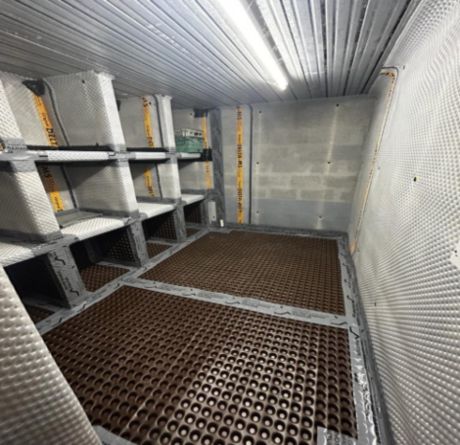
Type C waterproofing is made up of a series of waterproof membranes applied to the floors and walls of the below ground space that depressurise and then divert any moisture or water ingress into drainage channels and out of the property. Because there is a small gap between the wall and the membrane, any moisture will be guided and is diverted away either through gravity drains or a sump pump, meaning that the internal space is completely dry.
Sump pumps are designed to suit each installation and are designed to handle significant amounts of water. They are excellent at preventing water ingress from entering the habitable dry space. These systems are effective and can be tailored to the specific needs and designs of a property. They are often regarded as the best systems given their maintainability.
The internal wall finishes can be either a plasterboard dry lining system or plastering directly onto the membrane. Floor finishes are either screeded or timber boarded. Wise Property Care are approved installers of Delta and Newton waterproofing membrane products.
When a basement is being used for commercial or residential purposes, BS8102 states that a combined waterproofing system should be used where the risks are deemed significant - meaning that a combination of either Type A, Type B (where the structure itself is constructed to withstand ingress) and Type C is required.
Wise Property Care have carried out numerous commercial waterproofing projects across Scotland, and are experienced in working with architects and design teams.
From installing waterproofing systems into commercial basements or underground parking garages to assisting the design of new build properties, Wise Basement Systems have the knowledge and experience to handle any project, and are regarded as the go to experts for below ground waterproofing.
When carrying out a basement conversion on your property it is essential you have full trust in the experience and expertise of the company you’re using. That is why it is so important to have a CSSW (Certificated Surveyor in Structural Waterproofing) who is experienced in dealing with below ground structures and waterproofing design.
You also need to trust that the work has been carried out and installed correctly - if something goes wrong moisture ingress can cause significant damage and even cause flooding.
Wise Property Care are approved installers of Delta, Koster, Safeguard and Newton waterproofing products. All surveyors and technicians undergo rigorous in-house and onsite training in order to be able to qualify as a trusted partner. We undertake quality assurance checks from the design stage, throughout the installation and onto completion of all projects we are involved with.
Wise Basement Systems have full coverage across Scotland with a number of surveyors with the nationally recognised ‘Certificated Surveyor in Structural Waterproofing (CSSW) qualification - this means they have the right training and knowledge to advise you on your basement conversion.
Due to the Scottish climate, many below ground spaces will require waterproofing to prevent damp and flooding from ground water. In areas with a high water table, or are susceptible to flooding, it is essential that if you’re thinking about a basement conversion you should speak to a professional during the design process. They will take into consideration recommendations from BS8102 - British Standard Code of Practice for the protection of below ground structures against water ingress and BS85500 - British Standard for flood resilient construction.
Waterproofing can be difficult to carry out correctly, as factors such as high ground levels, flood risk and the stresses and pressure caused by ground water each have an effect on the structure itself. It can also be difficult to select the correct product and install waterproofing membranes and slurries correctly.
There is no ‘best’ waterproofing method, rather they are situational, depending on the type of building and the purpose required. For domestic basement waterproofing conversions typically a Type A tanking system is commonly used with a Type C membrane system to ensure thorough protection.