
For your Local Experts call us on 0808 301 8231 or Contact Us
Wet Rot Treatments Across Scotland
Wet rot refers to a type of fungal decay that occurs when timber is exposed to excess moisture. There are hundreds of species of wet rot growing wild in Scotland, but only a small number will typically grow inside properties. If wet rot is left untreated it can cause timber to become brittle, weakened and ultimately lose its structural integrity.
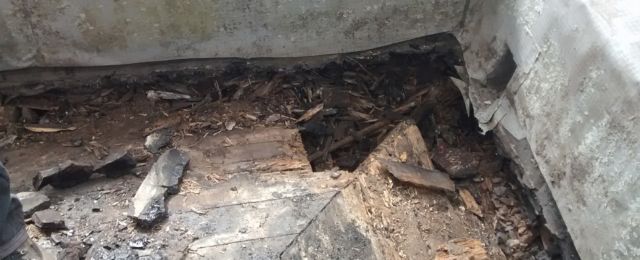
Wet rot can affect timbers at different locations in a property, but it often occurs out of sight until the timbers begin to fail. It is common in the joists of sub floor voids which are in contact with damp masonry, in roof spaces if roof coverings are defective or in below ground spaces like cellars and basements.
Because wet rot and dry rot can often be misdiagnosed, it is recommended that you have a qualified surveyor assess the problem and the extent of damage. Generally speaking, wet rot requires a source of constant moisture, which would be too much for dry rot, hence it is a common rot of wooden doors and windows.
Once confirmed, to prevent the problem recurring, the source of moisture causing the outbreak will need to be removed before treatments take place.
If you do require professional wet rot treatments, Wise Property Care are here to help. We have been helping homeowners and commercial clients deal with fungal decay for decades, with a number of CSRT and CSTDB qualified surveyors operating across Scotland.
We can provide advice and solutions for wet rot and dry rot, typically backed by our long term guarantees, giving you peace of mind.
What Happens if Wet Rot is Left Untreated?
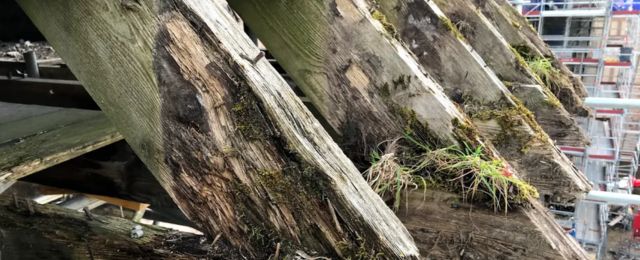
If left untreated, wet rot will lead to severe timber decay, and ultimately the loss of structural integrity. Wet rot causes timber to become soft and spongy, and as the fungal enzymes break down the wood structure it can cause cube-like cracking. This makes it a particularly worrying problem for structural timber which supports heavy loads, such as joists and beams. This can often lead to floors feeling bouncy, and unless dealt with properly could even lead to collapse.
If roof timbers are affected because of building defects, it can cause severe damage to rafters and trusses. This can lead to costly roof repairs and pose a serious safety risk to occupants.
If you have noticed signs of wet rot in your property and don’t know what to do next, it is recommended you seek professional advice from a qualified surveyor. They can provide you with a detailed assessment, and recommendations for next steps.
Can I Treat Wet Rot Myself?
Wet rot is a common problem that affects all types of timber, both cosmetic and structural, so you may notice problems on garden sheds, external window sills or door steps. It is even common in bathrooms because of leaks from faulty appliances.
Where wet rot problems are isolated or do not involve structural timber, it is possible for those with experience in joinery to carry out remedial repairs themselves. It is important to address the source of moisture while solving the problem, if not fungal decay could return.
Understanding the source of moisture can be difficult when timbers are affected inside the home. Specialist damp proofing may be required as well as repairs to timber. Thorough diagnosis of both the damp problem and the type of fungal decay causing the problem is therefore paramount - which is often where specialist assistance is required.
A qualified specialist surveyor will be able to identify the source of moisture, while providing long lasting treatments that are backed by long term guarantees. This can give homeowners the peace of mind their property is protected long term, something DIY treatments cannot.
Wet Rot Treatment Process
The first step in the treatment process for wet rot is for a professional surveyor to fully assess the extent of any fungal decay, and the condition of timber in the vicinity.
They will carry out a thorough inspection of both inside and outside the property, identifying the source of damp causing the problem. This is necessary because often fungal decay occurs under floorboards in the sub floor voids, in roof spaces or behind panelling.
The surveyor will also confirm the type of fungal decay causing the problem, differentiating between wet rot and dry rot. This is important as these types of fungal decay require different treatment processes, because dry rot is able to travel away from the source of moisture, through masonry and behind plasterwork in search of timber to attack whereas wet rot tends to remain confined to wet timber.
Once wet rot has been identified, the surveyor will provide you with a survey report outlining next steps and any requirements for remedial repairs. If you wish to go ahead, our experienced technicians will carry out remedial treatments to remove the wet rot and prevent its return.
Stopping the Source of Moisture
Once on site, the first step is to remove the source of moisture causing the problem. Generally this will require elements of structural damp proofing or repairs to building defects, but it is also possible this may be fixing faulty appliances, repairing leaking showers or taps, or fixing plumbing leaks.
This may require the installation of a damp proof course for a confirmed rising damp problem, fixing building defects or porous masonry for penetrating damp, or improving ventilation and airflow for a condensation problem.
If elements of damp proofing are required, this will be detailed in the survey report.
Removing and Replacing Damaged Timber
Where wet rot has caused structural damage to timber, sections may need to be cut back and replaced. Sometimes the whole section of timber may not need to be replaced, as the wet rot problem may have only affected the joist/beam end. If this is the case the rotten section can be removed, while the rest of the timber can be treated using a fungicidal treatment. This will kill any existing wet rot spores, protecting the timber long term.
In some cases, such as listed or historic properties in which the original timber has been partially damaged, timber resin repairs can be undertaken. Timber resin repairs allow for a new section of timber to be mechanically bonded to the existing timber before epoxy resin is used to create a seamless join. This is a useful option to prevent disruption to surrounding plasterwork. This approach is preferred by listed building professionals as the maximum amount of original timber is retained.
Finishing Touches
Once all structural timbers are back in place, floorboards will be relaid. If skirting boards have been compromised they will also need to be replaced.
Once complete, the technician will conduct a final sign off, and inform you on next steps and when the area can be redecorated.
All work will be carried out by technicians who are skilled in joinery and will carry out repairs to the highest industry standards.
Wise Property Care will take precautions to minimise dust and debris, with our technicians leaving your property as tidy as possible once treatments are undertaken.
Our technicians are equipped with vacuums, floor coverings and sheeting to keep dust and debris to a minimum inside your home
All of our technicians have Hilti dust extraction units which help remove airborne dust from the atmosphere while hacking off salt contaminated plaster, drilling or cutting timber.
Wet Rot Guarantees
When it comes to protecting your property, peace of mind is paramount. Wise Property Care provide genuine and comprehensive property repair guarantees that cover all aspects of our work – from the materials we use to the quality of our workmanship.
Typically our wet rot treatments will be backed by a long term guarantee of up to 20 years - giving you peace of mind your property is protected. Details of the guarantee will be provided in the survey report, and once provided can be transferred to future homeowners, should you choose to move in the future.
Preventing Wet Rot
While our treatments will get rid of a wet rot problem, steps can be taken to prevent wet rot in the first place. Wet rot is a form of fungal decay that feeds on timber that has an optimum moisture content between 50% and 60%. This is much higher than the optimum levels for Dry rot. However, timber is at risk of decay at 20% and above. In order to prevent wet rot you must remove the source of moisture that is allowing the fungal decay to occur.
To prevent penetrating damp occuring you must fix building defects that allow moisture to penetrate into the property. This could be high ground levels, debris under floors, missing roofing felt, broken or missing tiles, damaged gutters or blocked drains.
Internal leaks from appliances or faulty pipes can provide a source of moisture for wet rot to occur. Overflowing baths or shower trays may also cause issues.
When timber is in contact with damp masonry, wet rot can occur. Rising damp can lead to wet rot in joist ends which are in contact with masonry that does not have a damp proof course. If a damp proof course becomes bridged, this can also cause wet rot to occur.
Timber in below ground spaces such as basements or cellars can also be affected by wet rot. Damp below ground spaces that lack ventilation are susceptible areas for wet rot growth to occur.
Wet Rot Treatment Costs
The treatment costs for wet rot will depend on the extent of the problem, the type of damp involved and the extent of damage to structural timber in the property. If left over time, wet rot can cause significant damage, so you should carry out repairs as soon as you notice a problem.
In order to fully understand the extent of the wet rot outbreak and the necessary treatments involved, we would recommend you have a damp and timber survey carried out to provide answers on the exact problem, with treatments designed specifically for your property.
Is Wet Rot Covered by House Insurance?
Many house insurance policies will exclude wet rot treatments - but you should check your documents beforehand, just in case.
Wet Rot Solutions across Scotland
We have full coverage across Scotland, no matter where you are, we have local and qualified experts nearby to help with your fungal decay problem.
Why Wise Property Care?
When you are concerned about fungal decay or timber problems in your home or property, you want to use a company with experienced and specialist surveyors - with the right training and knowledge to reach the proper diagnosis.
Wise Property Care have both CSRT (Certificated Surveyor in Remedial Treatments) and CSTDB (Certificated Surveyor of Timber and Dampness in Buildings) qualified surveyors operating from a network of local branches - meaning no matter where you are in Scotland, we have a surveyor local to you.
- Wise Property Care have been fixing timber problems and building value back into Scottish properties since 1996.
- We have a proven track record working with homeowners, social housing and commercial clients across Scotland, delivering effective preservation solutions while ensuring full compliance with industry regulations and health and safety standards.
- We are proud members of the Property Care Association (PCA), the trade association that governs our industry. This means you can trust you’re getting professional and honest advice, and treatments following the industry best practice.
- Wise Property Care are endorsed by Which? Trusted Trader - meaning our customer service and workmanship has passed rigorous trading standards assessments.


