Dry Rot
Find out more about Dry Rot

For your Local Experts call us on 0808 301 8231 or Contact Us
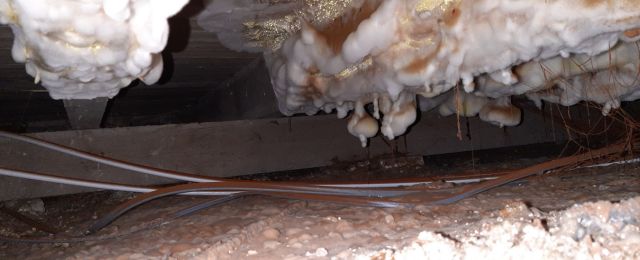
Dry rot is a very serious form of fungal decay which can spread throughout a property and destroy both structural and decorative timber. It is caused by one fungal species called Serpula lacrymans, a brown rot.
If you have noticed a dry rot problem in your property, it is important to use a qualified and professional property preservation company who have experience in dealing with dry rot problems.
As wet rot and dry rot can be misdiagnosed, it is recommended that you have a qualified surveyor assess the problem to confirm which type of fungal decay is present. It is not unknown for both to occur in different areas of a property. They will provide advice on the treatment process involved.
If you do require professional dry rot treatments, Wise Property Care are here to help. We have been helping homeowners and commercial clients deal with fungal decay for decades, with a number of CSRT and CSTDB qualified surveyors operating across Scotland.
We can provide advice and long term solutions for wet rot and dry rot, typically backed by our long term guarantees, giving you peace of mind you are protected long term
If the wood-destroying dry rot fungus (Serpula lacrymans) is left untreated, it can not only cause significant damage to structural timber, but it can also spread away from the source of moisture in search of new timber to attack. This means dry rot strands can spread throughout a sub floor void, through masonry into multiple rooms and even scross several stories of a building. These characteristics also mean that the moisture and infection source can also be in another property and pass through the party wall in its search for wood to consume.
The extent of growth can vary depending on moisture and temperature, but on average dry rot could grow as far as one metre in all directions in a year from each infection source. This makes it a much more worrying problem than wet rot.
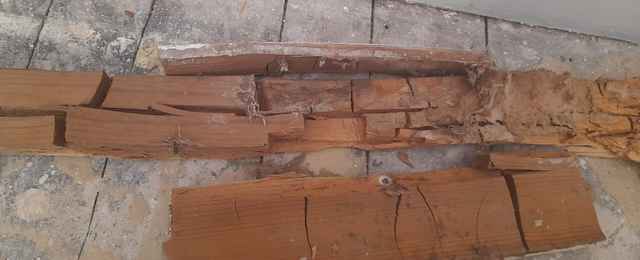
If left untreated, dry rot will lead to severe timber decay , as fine strands will use enzymes to consume and break down the structure of wood, weakening it. It can cause timber to warp and shrink, with timber splitting and cracking into small cubes.
In severe cases, dry rot can lead to the collapse of timber floors, ceilings and roofs. Because of this, if you have noticed the signs of dry rot in your property and are unsure what to do next, it is recommended that you seek professional advice immediately from a qualified surveyor.
They can provide you with a detailed assessment, and recommendations for next steps.
While it is possible to carry out treatments for dry rot if you catch it early enough, it is recommended you seek professional advice.
You must remove the source of moisture while fully investigating the area to understand the extent of the dry rot outbreak, which is often hidden out of sight in hard to reach areas.
If the problem is severe enough, has spread across several areas and has caused damage to structural timber, it is recommended that you seek advice from a qualified professional. Structural timber may need to be assessed in order to understand the extent of damage.
Over time, dry rot will cause significant damage to structural timber causing it to become brittle and weak. This means that floors may sag and dip, floorboards crack and joints and beams give way. This can be very hazardous for occupants.
Dry rot thrives in damp, humid conditions within a property, these conditions can sometimes cause issues for occupants.
Dry rot spores exist in the atmosphere floating all around us, but when the conditions are right, they can land on the surface of damp timber and germinate, causing a dry rot outbreak.
Dry rot is common in the damp, dark and unventilated areas of a property. When timberhas a moisture content as alow as 20%, dry rot spores wil germinate, but typically dry rot grows based on timber with a 30-40% moisture content. If timber is too damp, dry rot will die off and be replaced by wet rot.
The most common place dry rot is found is in sub-floor voids suffering from a lack of ventilation. This often occurs when air bricks become blocked or covered over and the sub-floor then becomes very damp or gentle persistent water ingress, dry rot can occur. When there is poor ventilation, condensation can also cause a dry rot problem.
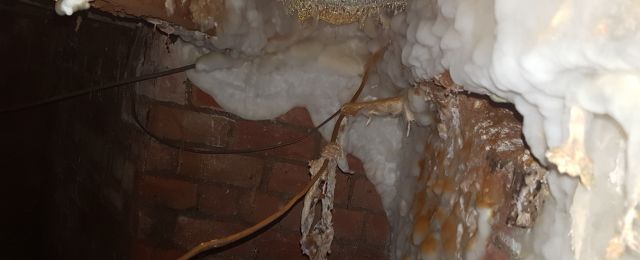
Once a dry rot outbreak occurs, hyphae will begin to form, and over time can collect together and form mycelium, similar to a root system. These can grow over masonry, concrete and steel surfaces. They are able to penetrate through masonry walls in search of new wood to attack. Mycelium will happily grow through party walls as it is looking for new timber as a food source.
If these strands exist in masonry, the dry rot problem could return even if the moisture source is temporarily removed. They lay dormant and when a new moisture source is present, the outbreak will start again.
This makes the fungicidal treatments for masonry necessary to prevent the problem, which makes dry rot different from wet rot.
Dry rot will cover the surface of brickwork, and can even penetrate through masonry walls
The process for dry rot removal requires specialist treatments in order to prevent the problem returning. In order to understand the full extent of the problem, it is highly recommended a damp and timber survey is carried out.
Dry rot is often caused by damp problems, so the surveyor can fully assess your property and provide you with recommendations to prevent the problem.
A CSRT or CSTDB qualified surveyor will fully assess the extent of any fungal decay problem, and the condition of affected timber in your property. They will carry out a thorough inspection of both inside and outside th premises, identifying the source of damp causing the issue.
Dry rot is commonly found in hard to reach areas that suffer from a lack od air circulation, so they will need to inspect under floorboards in the sub floor voids, in roof spaces or behind panelling.
The surveyor will also confirm the type of fungal decay causing the problem, differentiating between wet rot and dry rot. This is important as the two types of decay require different treatment processes.
The surveyor might also request what is known as exposure work to be undertaken by our technicians before the survey is completed, to fully understand the extent of the outbreak and allow a more accurate report and pricing. If this is the case, this will be discussed with you in advance.
Once dry rot has been identified, the surveyor will provide you with a survey report outlining next step and the requirements for remedial repairs.
If you wish to go ahead, our experienced technicians will carry out remedial treatments to remove the dry rot and prevent its return.
For dry rot spores to germinate they require a source of moisture. This can be caused by numerous factors, either from a lack of ventilation, building defects, porous masonry, rising damp problems or by condensation.
This means that elements of structural damp proofing may be required, while remedial repairs will need to be carried out to fix any building defects such as blocked drains, damaged gutters or defective roof coverings.
If only dry rot strands have grown through masonry, plasterwork may need to be removed in order to expose the bare brickwork below. All fruiting bodies and mycelium in the affected area will be removed, before surfaces will be wire brushed down to remove growth and spores.
This is so fungicidal treatments can be carried out. These treatments will penetrate deep within the masonry to prevent the spread and growth of any dry rot strands within.
All badly effected timber will be removed and replaced. That includes panelling, skirting boards, ceilings, joists and floorboards that have shown signs of decay.
In all other cases, where possible, timber will be retained, with technicians removing all affected timber extending beyond the last visible signs of damage. This is normally assessed in 300mm sections beyond the last point of fungal growth on the timber.
Remaining timber must be cleaned down or wire brushed and assessed for protective surface treatment during the property drying period.
Fungicidal treatments can then take place on any other surfaces. If structural timbers are unaffected by the dry rot fungus then a fungicidal paste, spray or injection can be applied to create a protective chemical barrier.
Once fungicidal treatments have taken place, new timbers can then installed. All unaffected timber will be reinstalled, with new joists and beams laid and floorboards reinstalled.
Pre-treated timber is used where required or treated in-situ. Any timber that is in contact with masonry will be wrapped with a damp proof membrane in order to prevent any moisture from the masonry causing further issues.
In some cases, such as listed or historic properties in which the original timber has been partially damaged, timber resin repairs can be undertaken.
Timber resin repairs allow for a new section of timber to be mechanically bonded to the existing timber before epoxy resin is used to create a seamless join. This is a useful option to prevent disruption to surrounding plasterwork and ceilings. This approach is preferred by listing building professionals as the maximum amount of original timber is retained.
In some areas improvements to ventilation may be required. Ventilation will help improve airflow in order to reduce the humidity and thus remove the conditions necessary for dry rot spores to germinate.
Typically this is done through the installation of air bricks to improve the ventilation of sub floor voids.
Other methods of ventilations can include air vents or PIV units for whole house ventilation.
Now that all repairs have been carried out, exposed masonry walls can then be replastered, before skirting boards can be refitted.
Once complete, the technician will conduct a final sign off, and inform you on next steps and when the area can be redecorated, if areas have been replastered.
All work will be carried out by technicians who are skilled in joinery and will carry out repairs to the highest industry standards.
Wise Property Care will take precautions to minimise dust and debris, with our technicians leaving your property as tidy as possible once treatments are undertaken. Our technicians are equipped with vacuums, floor coverings and sheeting to keep dust and debris to a minimum inside your home.
All of our technicians have Hilti dust extraction units which help remove airborne dust rom the atmosphere while hacking off salt contaminated paster, drilling or cutting timber.
When it comes to protecting your property from dry rot, peace of mind is paramount. Wise Property Care provide genuine and comprehensive property repair guarantees that cover all aspects of our work - from the materials we use to the quality of our workmanship.
Typically our dry rot treatments will be backed by a long term guarantee of up to 20 years - giving you peace of mind your property is protected.
Details of the guarantee will be provided in the survey report, and once issued can be transferred to future homeowners, should you choose to move in the future.
The treatment costs for dry rot will depend on the extent of damage to structural timber in the property.
If left untreated, dry rot can lead to significant damage across several stories of a property, as dry rot is able to spread in search of new timber to attack. It can spread through masonry and behind plasterwork, so you should carry out repairs as soon as you notice a problem.
In order to fully understand the dry rot outbreak and the necessary treatments involved, we would recommend you have a damp and timber survey carried out to provide you answers on the exact problem, with treatments designed specifically for your property.
This might also require what is known as exposure work to be undertaken by our technicians, to fully understand the extent of the outbreak and allow more accurate pricing.
We have full coverage across Scotland, no matter where you are, we have local and qualified experts nearby to help with your dry rot problem.
When you are concerned about dry rot or timber problems in your home or property, you want to use a company with experienced and specialist surveyors - with the right training and knowledge to reach the proper diagnosis.
Wise Property Care have both CSRT (Certified Surveyor in Remedial Treatments) and CSTDB (Certified Surveyor of Timber and Dampness in Buildings) qualified surveyors operating from a network of local branches - meaning no matter where you are in Scotland, we have a surveyor local to you.