Due to the Scottish climate, many properties are affected by issues that can cause timber to deteriorate and decay. When structural timber becomes damp, often from external defects and the damp weather, fungal decay and woodworm can occur.
Homes across Scotland are built using structural timber, which means joists, lintels and beams can make the risk from damp even greater, especially if regular building maintenance is not carried out.
A qualified surveyor will be able to assess the extent of the damage, and will provide advice on what structural timber repairs are required. On some occasions sections of timber can be retained from the point where decay stops, whilst the decayed section is removed.
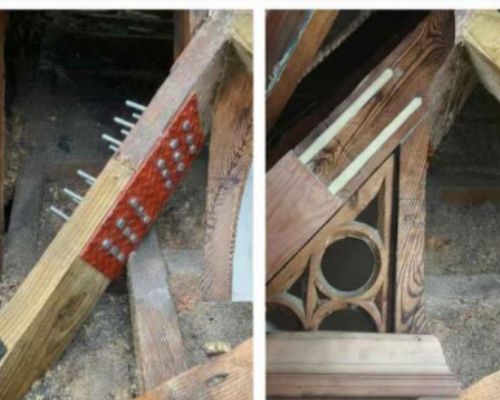
The original timber is cut back, before a replacement section of timber is bonded in place using mechanical fixings and epoxy resins. This is known as a timber resin splice (TRS) system.
This technique can be a cost effective alternative to removing the whole section of timber, especially in older, listed and historic properties where this could cause significant damage and disruption. In some cases, replacement timber in the same dimensions is unobtainable and therefore this is the only route available.
Timber resin repairs once complete will retain the original appearance of the timber, as the new timber can be stained or painted, while the repairs are concealed inside. This means the repair will match the original aesthetics, removing the need for unsightly steel plates and bolts. In listed or historic buildings, this repair process may be the only method acceptable to gain listed building consent.