Rated Excellent on Trustpilot for our Customer Service
Delivering Property Repair Treatments across Scotland for over 25 years
Basement and Cellar Tanking - Expert Installers Scotland
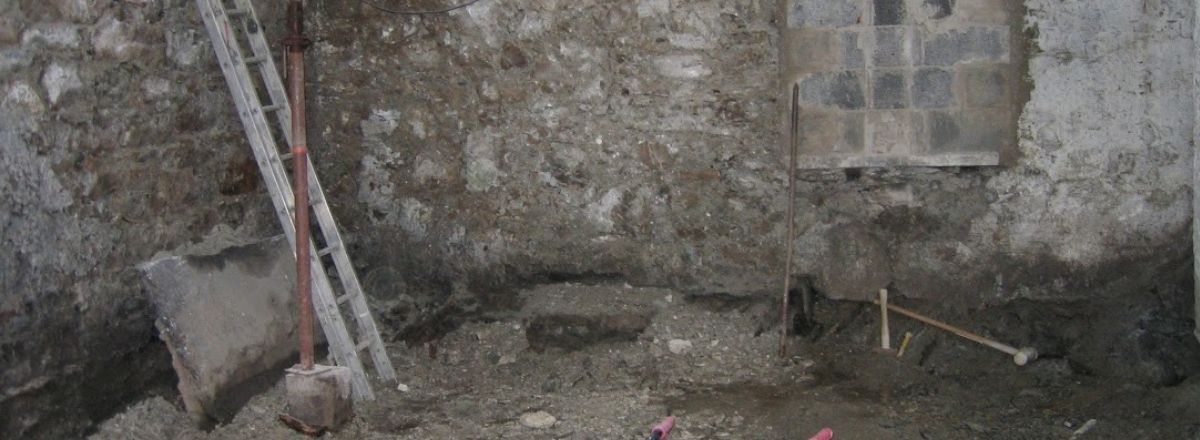
Below ground spaces such as basements and cellars are often unused, dark and damp spaces, but waterproofing techniques such as basement tanking can be used to turn these spaces into habitable living areas.
Basement waterproofing can increase the value of properties in Edinburgh and Glasgow, and across Scotland.
Waterproof tanking is a very common method to create habitable living space in a basement or cellar, with products used to create a watertight barrier between the surrounding damp ground and the internal space.
Heating and ventilation requirements are also considered, to control excess moisture and the risk of condensation from living in the basement. Because moisture can penetrate through masonry into your basement, a waterproof barrier can prevent this. Tanking systems will also prevent salts and minerals from migrating through, protecting the internal surfaces.
We have a number of Certificated Surveyor in Structural Waterproofing (CSSW) qualified surveyors operating across Scotland who can provide advice and work closely with you from the initial survey to the waterproofing design process, and then through to installation.
We can design waterproofing incorporating tanking to British Standard 8102 - the industry standard for below ground waterproofing in Scotland.
What is Basement Tanking?
Basement tanking is a type of waterproofing technique where a waterproof coating (typically a slurry which is applied as a paint, liquid or trowel applied slurry) is applied to external or internal walls, depending on access. Once applied it creates a watertight barrier which prevents moisture and hygroscopic salts from penetrating into the internal space.
Versatile in nature, it can be used in combination with other waterproofing techniques. For existing structures, a cementitious product is directly applied onto the walls and floors. The slurry bonds to the surface and cures.
Tanking membranes are commonly used on new build properties with pre-applied sheet membranes used when waterproofing the new floor slab. These are installed to be continuous with the waterproof tanking applied to the walls.
Basement tanking is known as Type A waterproofing and is commonly used in basement waterproofing systems to meet British Standard 8102, the industry standard for below ground waterproofing in Scotland.
Type A Waterproofing - Barrier Protection
Waterproofing using tanking membranes and slurries is categorised as Type A barrier protection, outlined in British Standard 8102. Type A waterproofing is the application of waterproof material directly onto walls and floors, and can be installed both externally and internally.
This then forms a waterproof barrier or ‘tank’ around the inside space. British Standard 8102 states that when waterproofing for Grade 3 protection (a completely dry environment with no water penetration or damp patches permitted), a waterproofing design should use more than one type of waterproofing system, meaning that Type A barrier protection should be used in conjunction with Type B (structurally integral concrete) or Type C (drained protection).
This lowers the risk of the waterproofing design failing, as two types of waterproofing have been installed. It is also often a requirement of secondary insurance warrantee providers.
Wise Property Care will typically design and install waterproofing systems using a combination of Type A and Type C waterproofing.
When retrofitting waterproofing systems onto an existing structure, you must take into account the increased stresses. This is why it is important to use a CSSW qualified surveyor.
Tanking Paints and Slurries
Tanking paints and tanking slurries are the generic name for products used to create a watertight barrier on structures such as basements and cellars. They can sometimes be called ‘cementitious tanking products’ and are generally made up of a mixture of cements, aggregates and chemicals that are designed to create a bond on masonry to make a waterproof barrier.
Tanking products will typically require a minimum of two coats to be effective, and for a tanking slurry to be classified as “waterproof” it must satisfy certain conditions set out by the British Standards Institute (BSI).
Tanking a Basement or Cellar
Where land is at a premium, or where buildings have been built into high ground levels, basement waterproofing is a useful option to increase habitable space while also increasing the value of a property.
In order to guarantee a dry environment, specialist measures must be taken in order to prevent moisture ingress and issues such as condensation. As surfaces will be sealed, but may remain cold due to being below ground, consideration must be taken around heating and ventilation requirements. If the basement is a habitable space, excess moisture from occupation must be removed, to prevent the risk of condensation formation.
Structures that are below ground level at the point of a damp proof course (DPC) are susceptible to moisture ingress through lateral penetrating damp from the surrounding ground or ‘overtopping’ of the waterproofing measures. It is important that the below ground waterproofing is taken upwards until it can meet the damp course or to a point above ground level.
These spaces can also suffer issues relating to high water tables, flooding, burst water pipes, run off and surface water from above.
To remove the risk of flooding or water ingress into the below ground space you must also consider topography, geology and water tables, taking into account any new risks in the future if any of these parameters change, in particular due to climate change or construction projects within the immediate area.
This is why it is important to use a CSSW qualified professional during the design stage if you are thinking of tanking a below ground space for habitable living. They will be able to design a system to the industry standard for waterproofing, British Standard 8102.
During the installation process it is important to address and prevent any water seepage in order for the application of tanking slurry to work as intended. It’s essential to use the products designed specifically for below ground waterproofing, while care must be taken when applying slurries in order to maintain a continuous barrier, especially in the weakest areas such as wall floor joints.
Incorrect products being used, or poor quality of installation can cause system failure, which will mean moisture can penetrate inside.
Basement failure can lead to the deterioration of newly installed plaster, flooring, stored goods and furnishings.
Waterproofing to the correct standards for habitable living can be complicated, so it is important to use a reputable, qualified and professional contractor when carrying out below ground waterproofing.
Basement tanking systems can be used to waterproof below ground structures and create habitable living space.
Tanking Basement Walls
Tanking membranes and slurries can be used on the walls of structures that are below ground level in order to stop moisture ingress.
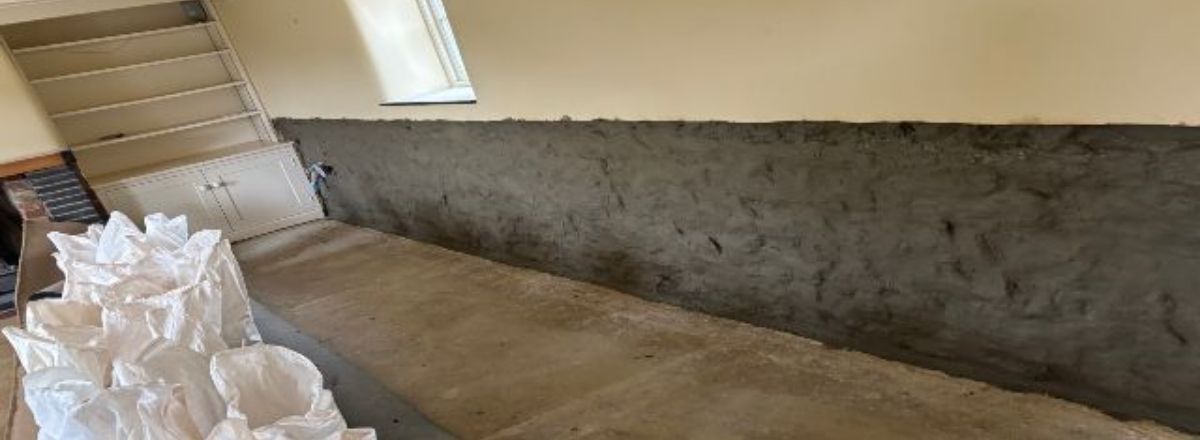
They can be applied externally or internally, depending on the construction and access. The most common way for walls to be tanked in Scotland is to apply a cementitious render on the internal wall of an existing structure.
Any wall that is being tanked must have sufficient strength to resist the loading by water pressure on the surface once the product has been installed. This requirement includes floors, as pressure may be brought to bear by high water tables.
For new builds it is common for structural engineers to factor this in when designing a new build below ground space, but this will not happen if waterproof tanking is applied to an existing structure.
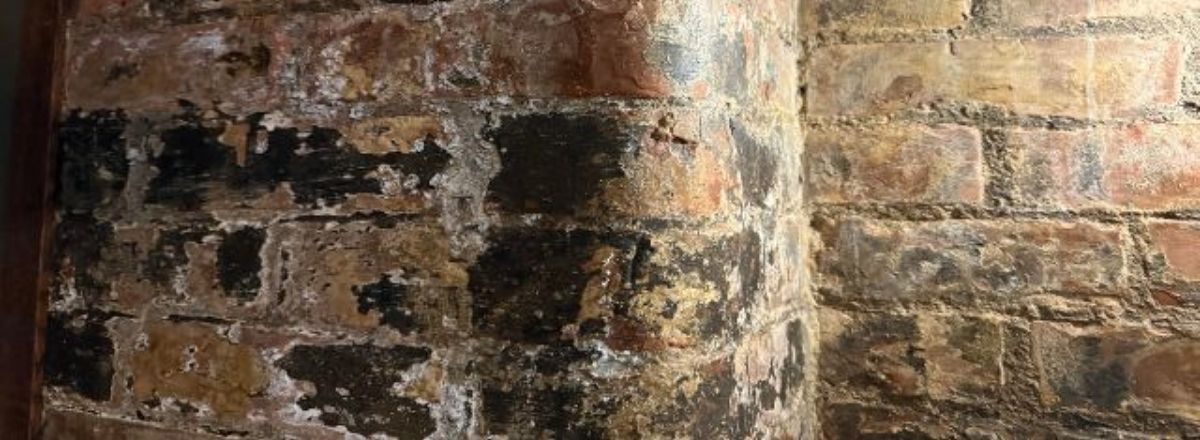
All surfaces must be prepared for tanking slurry to bond correctly, so any existing renders or plasterwork must be removed, while deteriorated mortar is repaired.
Walls must be prepared thoroughly with deteriorated mortar and salty patches removed in order for a waterproof tanking slurry to bond correctly.
Waterproof tanking slurries can take upwards of 48 hours to fully cure, while in certain sections you may notice the slurry appears to ‘sweat.’ This is a normal part of the drying process for these types of product.
Once the coating has fully dried, bonded and cured it can then be plastered ready for decoration. A skim coat of plaster can be applied onto the surface. It is important not to penetrate or damage the waterproofing coating, as this could lead to moisture ingress into the internal space.
As surfaces will be sealed, but may remain cold due to being below ground, consideration must be taken around heating and ventilation requirements, to prevent the risk of condensation formation.
For basement waterproofing designs to meet BS 8102 standards, often a Type C (drained protection) system is applied on top of the installed waterproof tanking. This lowers the risk of the waterproofing design failing as two types of waterproofing have been installed. It is also often a requirement of secondary insurance warrantee providers.
Waterproof tanking slurries can be applied on walls where the ground level is higher externally, preventing moisture ingress, or as part of a below ground waterproofing system.
Tanking Basement Floors
Tanking floors that are below ground level can be carried out during the building process, or retrofitted in existing structures. For new builds pre-applied fully bonded sheet membranes can be used below the floor slab, which create a continuous waterproof barrier with tanking applied to walls.
For existing floors the surface must be prepared adequately before a tanking slurry is applied. Floors can be protected by applying a further floor screed, adding protection to the waterproof barrier, whilst preventing wear and tear.
Below ground spaces can be vulnerable to vibrations in the ground or extreme hydrostatic pressure from water in surrounding earth or burst water pipes. This can cause walls and floors to be pushed inwards and upwards by ground water pressure, which in turn can cause issues for tanking systems. This can lead to cracks and leaks in the tanking if installed incorrectly.
As noted for tanked walls above, these risks must be considered when carrying out waterproofing tanking techniques to both walls and floors. Professional advice is recommended to prevent issues in the future.
Basement Tanking Costs
Costs of tanking a basement can vary, depending on the size and scope of the project, and the condition of the existing structure. If the end use is for habitable living space, BS 8102 dictates that two forms of waterproofing systems are used, which can also increase the cost - but this is necessary to provide a dry internal space for occupants. The extra cost of heating and ventilation requirements to remove excess moisture from occupation of the basement must also be considered.
A waterproofing survey from a CSSW qualified surveyor can provide a survey report with costs for a basement tanking system. They will carry out a thorough survey of the space, providing advice and recommendations for waterproofing. The waterproofing system required will depend on your proposed end use of the space in question.
Poorly installed basement tanking systems can lead to failure, and ultimately water ingress. It can cause damp problems, mould growth, fungal decay and even structural issues if hydrostatic pressure is not taken into account. This is why it is so important to use a reputable company with qualified surveyors for any below ground waterproofing.
Professional Tanking Services Across Scotland
Wise Basement Systems have full coverage across Scotland with a number of surveyors with the nationally recognised ‘Certificated Surveyor in Structural Waterproofing (CSSW) qualification - this means they have the right training and knowledge to advise you on your basement conversion or any waterproof tanking requirements.
Fully qualified surveyors and expert technicians with the experience required to provide advice and install basement tanking systems.
Our frontline CSSW qualified surveyors are supported by our national waterproofing division with over 27 years of waterproofing experience.
All products used undergo an extensive testing process by the manufacturers to attain BBA/BDA certification.
We regularly work with contractors and builders to design a tailored basement waterproofing system to suit your needs, helping you step-by-step from design to completion.
Our cost-effective techniques mean the installed systems will control the moisture entering the building structure, with the correct ventilation system in place.
Wise Basement Systems as part of Wise Property Care are proud members of the Property Care Association (PCA), a Which? Trusted Trader, CHAS and Safecontractor approved.
We are rated ‘Excellent’ on Trustpilot with over 550 independent customer reviews from across our branches in Scotland.
All installations that comply with the BS8102 standard carry a 10-year guarantee - giving you long term protection against water ingress.