
For your Local Experts call us on 0808 301 8231 or Contact Us
Damp Walls
Damp walls affect many properties in Scotland, and can have an impact on the internal environment of a home. They can cause musty smells, unpleasant stains and even cause the property to feel cold, as wet walls reduce thermal insulation.
Damp can cause damage to structural timber, as a moisture source allows fungal spores to germinate which can lead to a wet rot or dry rot problem. Over time, damp can deteriorate plaster, cause wallpaper to peel off and cause permanent damage to paint. Some types of damp can even lead to mould growth which can have effects on the immunosuppressed, very young or elderly, or a person with a specific allergy to mould or fungi.
If you have noticed the signs of damp on internal walls, this may be caused by several different types of damp. It's important to fully understand the source of moisture causing the problem in order to provide a long term solution. Painting over the problem won’t solve the root cause and may in fact make things worse in the long run.
Wise Property Care can carry out a damp and timber survey if you are unsure, and require a professional opinion.
What Causes Damp Walls?
Damp patches on internal walls are caused by moisture penetrating into the fabric of the building from outside, excessive moisture creation internally through condensation, or through rising damp. These types of damp have different telltale signs, and can be identified in different ways.
Sometimes a damp patch on a wall is caused by a leak, often from internal plumbing problems. Double check pipes or seals are not damaged on appliances such as washing machines near the damp wall in question and trace waste pipe or water pipe runs that may be hidden within walls. If this is the case you may require a plumber and not remedial damp proofing.
Identifying the Type of Damp Affecting Walls
To prevent damp walls it's important to identify the type of damp causing the problem, and then solve the issue. If left unaddressed, it can get worse over time, and could even cause further issues and more costly repairs.
Condensation on Walls
In Scottish homes the most common form of damp affecting walls is condensation, affecting as many as one in five properties. Excess moisture in the home is created through every day tasks like cooking and cleaning. Be aware that using paraffin, LPG or bottled gas for heating, produces at least equal volumes of moisture vapour, so can contribute to moisture loading.
Warm humid air will condense on cold surfaces around your home causing steamed up windows, damp walls and mould growth.
Condensation is common on north facing external walls, bay windows and behind furniture backed up to external walls and near areas where moisture is present, such as kitchens and bathrooms. Ventilation must always be present, whether from an open window, trickle vents or extraction fans. This helps remove excess moisture from the internal atmosphere, before it has a chance to condense on cold surfaces.
Mould growth is typically caused by condensation, although it can be caused by penetrating damp on some occasions, as the wall will cool and may reach ‘dew point’.

Cold spots (caused by cold bridging) on external walls can cause warm humid air to condense, and over time mould spores can germinate.
Penetrating Damp on Walls
Damp can easily penetrate a solid brick outside wall, but should be stopped by a cavity wall. If your cavity wall is showing damp on the inside the cause will be more complex, such as bridging on cavity wall ties, debris at floor level or poorly fitted insulation.
Penetrating damp is caused by moisture externally penetrating into the fabric of the building.
This can be caused by high ground levels, but more typically from building defects and wind driven rain, such as damaged roof coverings or gutters and blocked drains. Often these issues can be solved by regular maintenance, and to confirm if this is the source of moisture you should investigate the same area externally. You may notice the damp patch is in a similar location to a blocked gutter for instance. Penetrating damp can appear on walls at differing heights and floors within a property.
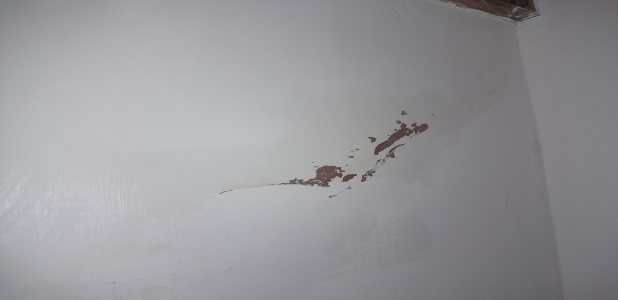
Penetrating damp is often caused by building defects, so checking the adjacent external wall for issues may provide answers
Rising Damp on Walls
Rising damp is the upward movement of moisture through capillaries in masonry walls. This water also contains dissolved salts, which get trapped in the masonry when the water evaporates. Buildings are constructed with damp proof courses (DPCs) to prevent rising damp, however older properties may not have these, or they might have deteriorated over time. Sometimes these can become bridged by high ground levels externally such as raised paths or drives, or internally by plasterwork. The telltale signs of rising damp are salty damp tidemarks above the skirting board, up to one metre high, but never on upper floors, where another form of damp will be the issue.
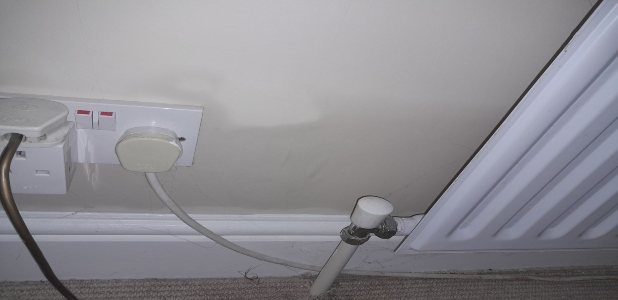
Rising damp is less common than people realise - but it can lead to structural damage and fungal decay if left untreated
Internal Damp Wall Treatments
Correctly identifying the type of damp is essential to treat the problem, and stop it returning. The treatment processes differ depending on the type of damp, and the source of moisture. If you have noticed signs of damp but are unsure about what is causing the problem, you may require a professional surveyor to carry out a damp and timber survey.
They will be able to provide you with answers, giving you peace of mind that a qualified expert has fully investigated the damp problem. If a damp problem is confirmed, they will provide you with recommendations for treatment - but only if it is required.
Internal Damp Wall Treatments Include:
Remedial Damp Proofing for Rising Damp
If there is no evidence of a damp proof course or it is defective, but evidence of a rising damp problem, you may require a remedial damp proof course. This will create a waterproof barrier that prevents the upward movement of moisture into internal walls. If plaster is contaminated with hygroscopic salts (which can pull moisture out of the air into the wall), the area may need to be replastered, including the use of a salt retardant additive. Salts trapped in the wall and plaster can absorb moisture from the air, so if not replaced may cause further damp issues in the future.

Chemical damp proof courses work by injecting silicone based cream into the wall at intervals, creating a waterproof barrier
Ventilation and Thermal Improvements for Condensation
For a condensation problem it is important to get the right balance between ventilation, thermal insulation and internal heating. This means having extractor fans in rooms where moisture is created, while some properties may require PIV units. Cold spots where mould is forming can be addressed with thermal improvements such as thermal plastering, anti condensation paints and insulation being installed. For extensive mould problems you may require professional mould cleans.
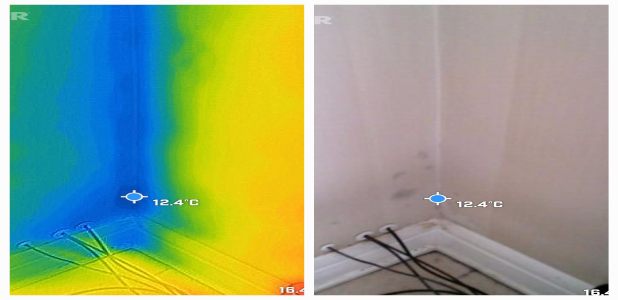
Thermal imaging cameras are used to identify cold spots (cold bridging) where moisture may condense on walls, causing mould to form. These areas may require thermal improvements such as thermal plastering.
Recommendations to Prevent Moisture Ingress
Penetrating damp can be caused by a whole manner of building defects which in some instances simply require DIY fixes or small remedial repairs from a local builder. If there are high ground levels, meaning the internal living space is below ground level, you may require elements of structural waterproofing if the ground cannot be lowered, as may be the case of rooms partly below ground. For porous brickwork specialist masonry protection creams can be used.
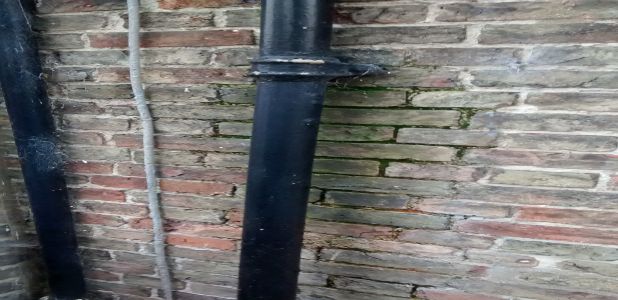
Internal damp patches may be caused by building defects such as blocked downpipes causing water to spill out at unsealed joints. You may have similar shaped damp patches on the exterior wall, decayed mortar joints and brick spalling.
Below Ground Damp Walls
Converting a below ground space into a habitable room is something many people in Scotland consider, but to turn a damp or wet basement into a living space requires
waterproof techniques that prevent moisture ingress. Sometimes buildings can have high ground levels abutting the property, so structural waterproofing is also required.
Because basement or cellar walls and floors are below ground it’s essential to manage water correctly, as risks of flooding or high water tables can lead to moisture ingress into the property. It should also be remembered that these walls will also be cold due to contact with the cold ground. This can provide a cold bridge on which condensation and then mould will form. Adequate ventilation must always be provided to basements.
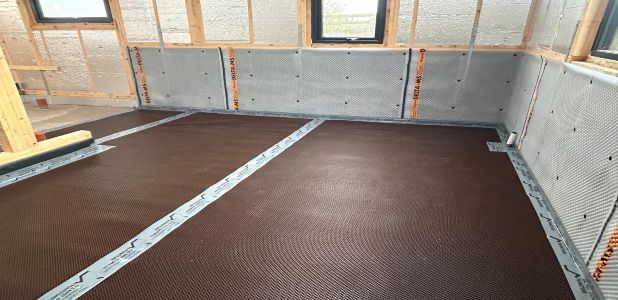
Cavity drainage membrane systems can be used to waterproof below ground or high ground spaces
Damp Proof Paint Options
Damp proof paints can provide useful solutions to damp problems, but should not be used to mask problems without addressing the root causes. A detailed damp and timber survey should be carried out to fully assess the extent of the damp problem and to make sure the problem does not return. If installed incorrectly, or the wrong product is used, they could trap damp and cause further issues.
Anti-Mould Paint and Thermal Paints
For isolated areas of condensation caused by cold bridging, Thermal anti-condensation paints can be applied to create a thermal barrier between the cold surface and the warm moist air. These paints use glass beads which create a thermal barrier, therefore air is insulated against the colder wall surface, condensation is controlled and mould growth is prevented.
Anti-mould paints contain a fungicide and merely mask the problem by killing the mould that forms. When used correctly, they are useful, but condensation will still form and may cause other issues.
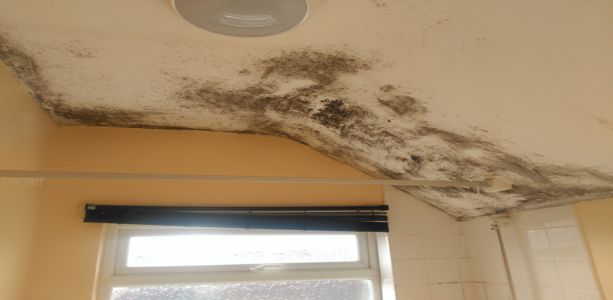
It is difficult to insulate eaves voids from the loft, so thermal paint can be successful in stopping the thermal bridge in bathrooms, where condensation and mould form.
Masonry Protection Creams
Externally, a masonry protection cream can be used to create a water-repellant barrier on porous building materials like brick, stone and concrete to prevent penetrating dampness caused by wind driven rain. This is a prevalent issue in Scotland, especially for single skin stone buildings in areas by the coast or in the Scottish Highlands.
It can protect against spalling, efflorescence and moss and algae growth, and because walls are dry, this will help improve thermal efficiency, meaning less heating is required to keep the internal environment warm. They can protect properties from rain penetration for many years, and once applied, within 48 hours the original looks and features of the masonry will be retained.
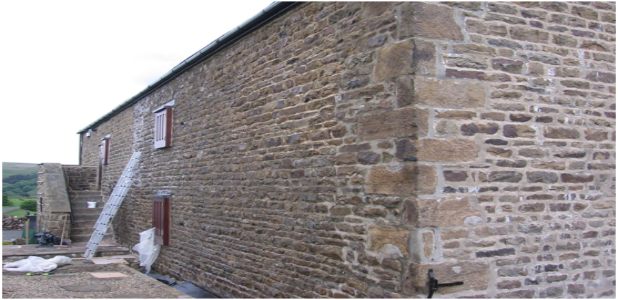
Application of Masonry protection cream to solid stone wall.
Damp Walls FAQs:
-
Do damp proof paints really work?
Damp proof paints work by creating a waterproof barrier to stop moisture on a surface penetrating into the fabric of a building. They are effective but will not stop the source of the damp and may trap moisture in the structure - so solutions such as damp proofing or repairing building defects may be required. It is important to make sure to use the correct product, and it is installed correctly.
-
When should I use Damp Proof Paint?
Damp proof paints should only be used for isolated areas of damp, and only once the root cause of the damp has been identified and addressed. If you do not address the problem causing the damp, it is likely that it will return and cause further problems.
-
How to fix damp on an internal wall?
To fix damp on an internal wall you must first identify what type of damp it is, and where the source of moisture is coming from. The problem could be rising damp, penetrating damp, condensation, salt damp or even a plumbing leak. Each will have telltale signs that indicate what type of damp is causing the problem - but if you’re worried about the problem you can always arrange a damp and timber survey with a qualified surveyor.
-
How do you dry out damp internal walls?
To dry out a damp internal wall you must stop the source of moisture causing the problem. Improving air circulation by opening windows or using dehumidifiers may help, and removing wall coverings such as wallpaper will speed up the drying process. The drying out period will depend on the type of masonry, indoor temperature and humidity. Solid walls will dry out at approximately 25mm (1 inch) a month.
-
When should I worry about damp walls?
If you have just noticed damp patches on your walls, the best time to solve the problem is straight away - if you leave a damp problem it could get worse, and over time could cause structural issues such as wet rot or even dry rot. Investigate the area to fully understand what might be causing the problem, and if required get professional advice from a qualified damp surveyor.
-
Can damp walls cause health problems?
Yes, damp walls can cause health problems, with these typically associated with mould growth caused by condensation. Exposure to mould spores over a long period of time can cause issues for a person who is immunosuppressed, very young or elderly, or who has a specific allergy to fungi. It can also cause issues such as coughing, wheezing or sore throats. If you think the black mould problem is exacerbating your health problems, you should seek professional help to remove the problem, and speak to your GP or seek professional medical help.
Properties suffering from condensation are often poorly ventilated. This may cause health issues unrelated to mould. Moist stale air may also contain dust mite allergens and volatile organic compounds (from cleaning products, hair spray, deodorant, scented candles etc.), which can contribute to asthma symptoms.
-
Can you treat damp without removing plaster?
Yes you can treat some types of damp without the need to replace plaster. Condensation and penetrating damp caused by building defects may not require plasterwork to be removed. A confirmed rising damp problem may need plasterwork to be removed as the plaster may contain hygroscopic salts brought up into the masonry from the groundwater. These salts will remain in the plasterwork and masonry and could draw moisture from the atmosphere, causing a damp problem to reappear, despite a new damp proof course being installed. This is why replastering with a salt retardant additive is necessary to prevent future salt migration.


