
For your Local Experts call us on 0808 301 8231 or Book A Survey Online
How to Identify Wet Rot in Scottish Properties
Wet rot is a serious problem that affects properties across Scotland, as timber is a common material used to build homes and buildings. It can cause timber to lose its structural integrity over time, so accurate diagnosis and treatments are essential to make sure your property remains protected and structurally sound.
Wise Property Care are Property Care Association Members and have branches across Scotland, so we are able to assist you with any issues you may have relating to damp and timber.
We are experts in Scotland for wet rot identification, treatment and property preservation.
We have put together a guide on how to identify wet rot, how it occurs and what to do if you suspect a wet rot problem in your property.
What is Wet Rot?
Wet rot is a group of fungi that decay timber which have been exposed to moisture. There are several different types of wet rot species, but all typically sustain themselves on the moisture and nutrients from damp timber, which over time causes it to lose structural integrity. Wet rot germinates when spores in the atmosphere land on wet timber, repeating the cycle.
Wet rot requires a higher moisture content (40-60%) than that necessary for dry rot, and unlike dry rot, it will remain at the moisture source. Dry rot can spread away from the source, with dry rot strands capable of navigating through masonry in order to find new timber to attack.
Although less destructive than dry rot, wet rot is still capable of causing severe damage to structural timber that is exposed to moisture over a period of time. This makes it a common problem across Scotland, due to the Scottish climate.
Types of Wet Rot in Scotland
There are many different types of fungal species that are classified as wet rot, but these can be broadly classified as either white rot or brown rot.
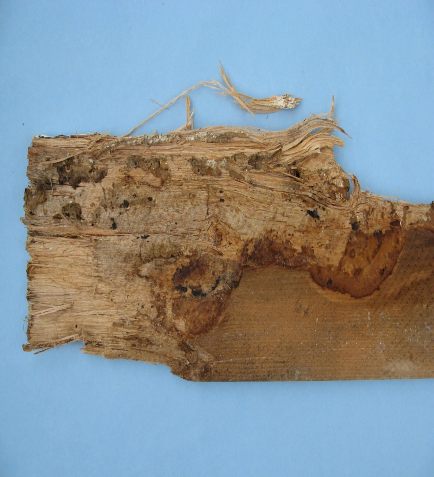
White Rot:
When some fungi attack timber, the decay can appear as a white discolouration. The fungal mycelium breaks down the cellulose and lignin that bonds the cells of wood together, causing the wood structure to become fibrous, meaning it is spongy to the touch. Common species causing stringy white rot are Oak fungus (Donkioporia expansa) and Phellinus contiguus.
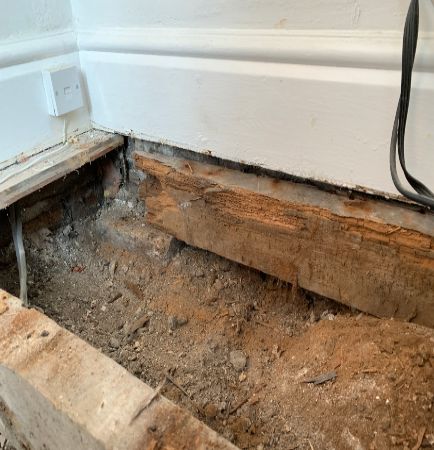
Brown Rot:
Decay by brown rots is darker in appearance to white wet rots and only digests the cellulose in timber, leaving behind the lignin. This makes the timber shrink and crack, go brown, dry and brittle to the touch. The most common type of brown rot is Cellar fungus (Coniophora puteana).
Why does Wet Rot Occur?
Simply put, wet rot occurs when there is excessive moisture present in timber over a period of time. Moisture is absorbed into the wood structure, and airborne wet rot spores in the atmosphere land and germinate, producing thread like structures called hyphae. These hyphae grow into a larger mass called mycelium, feeding on the wood, absorbing nutrients and breaking down the structure of the wood.
Causes of Wet Rot in Scotland
Wet rot is common in Scotland because of the country’s humid climate and high rainfall, meaning that exposed timber can become saturated, allowing wet rot spores to germinate.
Many properties in Scotland are built using traditional methods, meaning structural timber is prevalent in many older properties, especially in the Scottish Highlands and in Edinburgh and Glasgow. Many of these properties were built before damp proof courses became standard, and are of solid wall construction.
Along the Scottish coast and on the islands, wind driven rain can penetrate into buildings. This particularly affects properties where regular maintenance is not undertaken, such as clearing gutters and unblocking drains. This allows water to pool and then penetrate into the fabric of the building, dampening timber.
Contributing factors of Wet Rot:
Wet rot is often caused by building defects that require regular maintenance to prevent. Often problems are concealed under floors or in roof spaces and are undetectable. This is why a professional surveyor may be required to investigate fully.
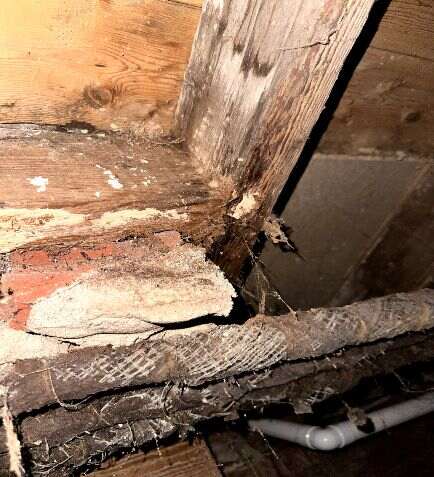
Examples of Wet Rot causes in Scotland:
- Damp solums
- Persistent leaks from roof defects, defective sarking or damaged roof coverings.
- Plumbing leaks or blocked drains
- Overflowing shower trays, sinks or baths
- Blocked or damaged gutters
- Rising damp affecting ground floor timbers, such as joists
- Penetrating damp through walls or around windows
- Spalled masonry, missing mortar or defective external renders
- Poor ventilation in basements, cellars or roof spaces
- Condensation build-up
Identifying Wet Rot in your Property
Correctly identifying wet rot can be difficult because it shares similar characteristics to dry rot and is often out of sight, concealed in hidden areas of a property. You may spot it in below ground spaces, under floorboards, behind skirting boards, window frames and cills, and around leaking bathrooms or appliances, such as baths, toilets, and washing machines.
To fully understand the problem you may require a professional surveyor who can confirm the type of fungal decay affecting your property and the extent of damage to timber.
Here are some common signs of wet rot which may indicate an issue in your property:
- Timber that is a darker colour than usual
- Timber that is soft and spongy to the touch
- Cracked timber that is crumbly
- Shrinking or noticeable changes in the shape of timber
- A damp, musty odour in the affected area
- Flaking paint with dark stains
- In severe cases, a visible fungal growth on the surface of the wood
If you suspect a rot problem in your property you can use a sharp instrument like a screwdriver to probe the timber - if it goes into the surface easily, this suggests you have a fungal decay issue and may require a damp and timber survey.
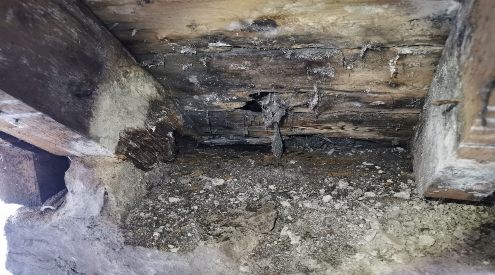
Common Places to Spot Wet Rot:
- Around window or door frames
- Sub floor joists and voids
- Basements and cellars
- Bathrooms and kitchens
- In roof timbers
- Exterior timber cladding
Effects of a Wet Rot Problem in Scotland
If unnoticed or ignored, Scottish properties are particularly susceptible to wet rot problems due to the humid climate and constant rainfall, which can exacerbate the problem over time. It is not uncommon for extensive repairs to be required, especially in sub floor voids and to joists, which may only be noticeable when floorboards feel unsturdy. Roof timbers where water has pooled may cause severe damage and could require repairs to rafters and trusses. Where 'snow melt' occurs, this can enter a roof far higher than expected from rain.
Wet Rot Survey Scotland
If you are worried about a fungal decay problem but you’re unsure what to do next, it is recommended you get a damp and timber survey from a professional surveyor who can identify the type of fungal decay and the source of moisture causing the problem, and then assess if any timber needs to be replaced.
All findings will be detailed in a survey report and the surveyor will be able to answer any questions you may have.
Damp and Timber reports are conducted by a professional surveyor who usually has CSTDB or CSRT qualifications, which means they can correctly identify damp and timber problems to strict industry standards.
We can provide damp and timber surveys for domestic homes, commercial projects and for listed or historic properties across Scotland.
Effective Wet Rot Treatments in Scotland
If wet rot is identified during a damp and timber survey, and you choose to go ahead with Wise Property Care, we can provide you with comprehensive wet rot treatment to eradicate and prevent its return, backed by a long term guarantee.
Identifying and Addressing the source of Moisture
The most important step in treating wet rot is to find and stop the source of moisture.
This may require repairs to roof tiles or guttering, elements of repointing to mortar or fixing external renders. Sometimes timber may need to be isolated from the source of damp, such as when floor joists are below the damp proof course level.
You may require elements of damp proofing to address rising damp caused by inadequate damp proof courses, or penetrating damp caused by high ground levels. When condensation is causing wet rot you may require improvements to ventilation, this typically involves fitting airbricks for sub floor voids or the installation of extractor fans in bathrooms or kitchens. If any of these repairs are required, they will be detailed in the survey report.
Timber Treatments and Repair Process
In extreme cases where timber has lost its structural integrity, elements of timber will need to be cut back and repaired, or replaced entirely.
Timbers that still have their strength may require an application of fungicidal treatments that kill the wet rot spores and protect the remaining timber. This can be applied by surface sprays and paste.
Where required floorboards will be relaid, and if any skirting boards have been damaged this will also need to be replaced.
Contact our Wet Rot Experts for a Damp and Timber Today
Don't let wet rot compromise the integrity of your property. Contact Wise Property Care today to book a damp and timber survey from an experienced and qualified surveyor local to you.
Wise Property Care have been building value in Scottish properties for over 20 years.
We are a proud member of the PCA and have a range of CSTDB, CSRT and CSSW qualified surveyors. This means you can trust you’re getting professional and honest advice local to you, and treatments following the industry best practice.
Wise Property Care are endorsed by Which? Trusted Trader, meaning our customer service and workmanship has passed the rigorous trading standards assessments.
We are rated ‘Excellent’ on Trustpilot with over 550 independent customer reviews from across our branches in Scotland.
We cover the whole of Scotland from our network of local branches:
Wet Rot FAQs
-
Is Wet Rot Dangerous?
While wet rot itself isn't directly harmful to humans, the damp conditions that promote its growth can lead to mould, which could cause respiratory problems. Spores present may aggravate hayfever or asthma symptoms in some people. It is more likely that the damage to the property is likely to cause dangerous conditions, as untreated wet rot can weaken timber structures, such as floor joists, potentially leading to collapse.
-
How much does Wet Rot Treatment cost?
The cost varies depending on the extent of the damage, the type of timber affected and the complexity and extent of the repairs. A professional survey is essential to accurately assess and understand the problem.
-
Can I treat Wet Rot myself?
DIY treatments may seem appealing and cost efficient in the short-term, but they often fail to address the underlying moisture problem, leading to recurrence. Professional wet rot wood treatment is always recommended for effective and long-lasting results.
-
How can I prevent Wet Rot?
Ensure good ventilation, promptly repair any leaks and regularly inspect timber, especially in damp-prone areas. Carry out regular maintenance to the exterior of your property, unblocking drains and gutters which can be backed up by leaves and debris during winter.
-
How to test for Wet Rot?
If you suspect a wet rot problem in your property in Scotland you can look at and feel the wood for dampness or a soft and spongy texture. You can use a probe to poke into the timber, if it sinks in easily this indicates the timber is rotten and has lost its integrity. You may also notice a musty smell. A professional surveyor will be able to identify the type of fungal decay if you are worried.
-
Is Wet Rot the same as Damp?
No, wet rot is a different problem to damp. Damp is the presence of excess moisture, while wet rot is a fungal infection that is caused by prolonged damp. Damp creates the conditions for wet rot spores to germinate, so the two are closely associated.
-
Does house insurance cover Wet Rot?
Most insurance policies will not cover you against outbreaks of wet rot, often as it is considered ‘wear and tear’ and caused as a result of poor maintenance. If a larger issue such as a burst pipe has caused the problem and subsequent damage, you may be able to check your policy to see if you are covered.
-
What if Wet Rot is found on a Home Survey?
If wet rot is found on a Scottish home survey you may require a further inspection from a specialist company who will carry out a damp and timber survey. This will be an in-depth survey to identify the source of moisture causing the problem and recommended repairs. This may be used to renegotiate the sale price, or may cause some to reconsider purchasing the property altogether. It is recommended that you solve the problem to prevent further damage, and any long term guarantees provided after remedial work can be transferred when selling the property.